What Causes Post-Construction Cleaning Rework on Winnipeg Commercial Projects?
Post-construction cleaning rework occurs when an area requires additional cleaning after its scheduled clean. It may result from missed items, restricted access, an unclear scope, or new contamination created by continuing trade activity. Eshine Cleaning Services helps Winnipeg project teams distinguish cleaning deficiencies from conditions that require additional work.
Why Post-Construction Cleaning Sometimes Has to Be Repeated
Cleaning performed before contaminating work ends may need to be repeated. Sanding, drilling, cutting, equipment testing, and material installation can release new dust or residue throughout an otherwise completed area. Contamination may travel through open doorways, shared corridors, ceiling spaces, and ventilation systems.
Restricted access also contributes to rework. Cleaners may be unable to reach surfaces blocked by tools, lifts, stored materials, protective coverings, or locked rooms. Inadequate permanent or temporary lighting can make fine dust, streaks, and residue difficult to identify during the initial clean.
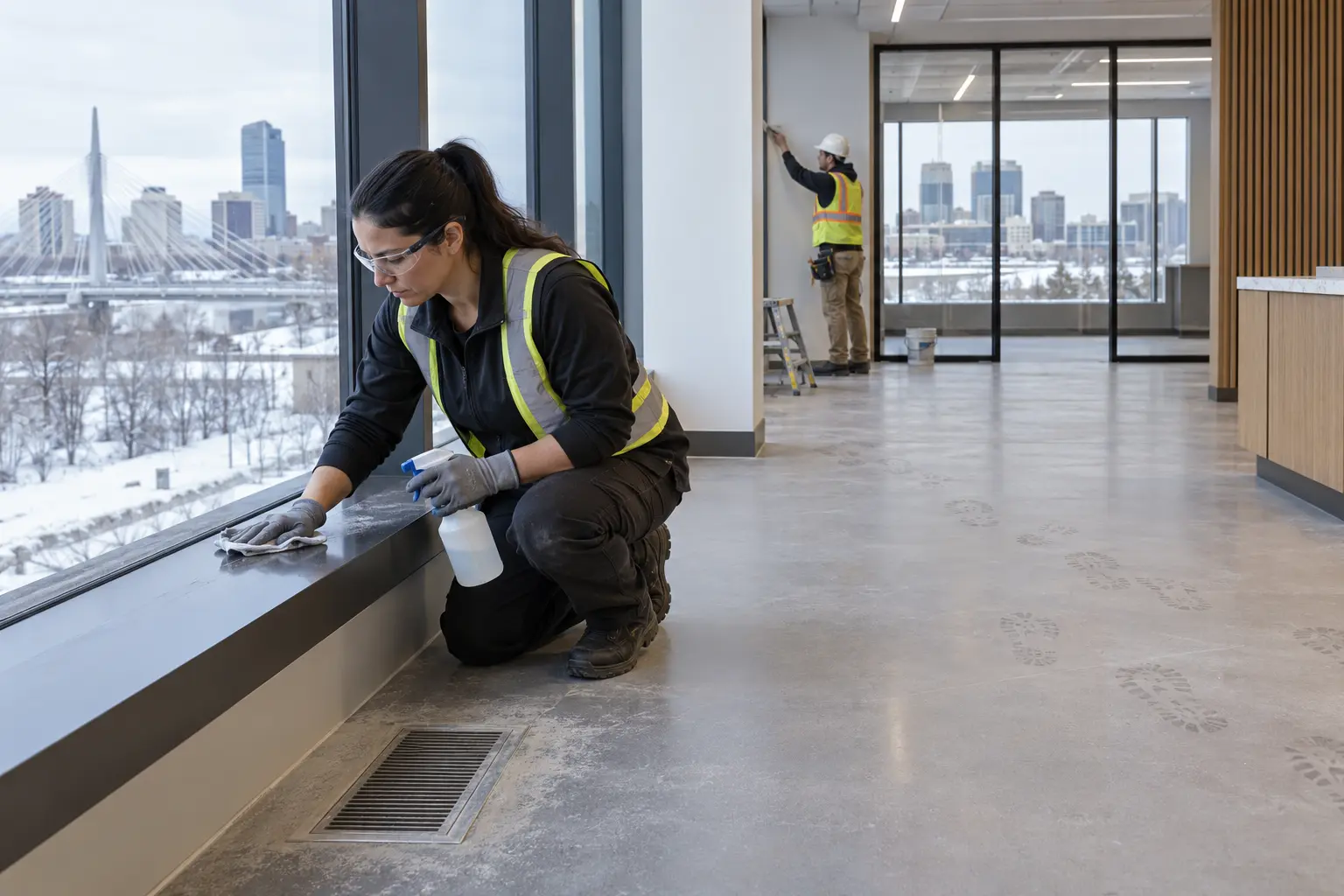
Winnipeg weather creates another risk while site entrances remain active. Workers and equipment may track snow, moisture, road salt, mud, and grit across cleaned floors. Temporary entrance protection and controlled access may reduce this contamination until construction traffic ends.
The cause matters when determining the next step. A missed surface within the agreed scope is a cleaning deficiency. Contamination introduced after cleaning or work that was inaccessible during the scheduled visit may require additional service. Dated photos, area-release times, walkthrough records, and trade-access logs help distinguish these situations.
Trade Work That Commonly Contaminates a Cleaned Space
Finishing activities may affect surfaces beyond their immediate work area. The risk increases when completed and active zones share access routes, ceiling spaces, or air circulation.
Drywall sanding and ceiling work
Drywall sanding creates fine particulate that settles on ledges, fixtures, walls, floors, and other horizontal surfaces. Even localized repairs may affect adjacent rooms when doors remain open or air movement carries dust through the building.
Suspended-ceiling installation and above-ceiling work may release tile particles, insulation fibres, and accumulated dust from mechanical or electrical components. Final surface cleaning should generally wait until overhead work is complete in the affected zone.
Cleaning may proceed elsewhere when finished zones are physically separated, contaminating work is contained, and airflow does not carry dust into released areas. Without these controls, cleaning one area while overhead or drywall work continues nearby increases the likelihood of rework.
Flooring, millwork, and touch-ups
Floor installation may introduce sawdust, adhesive residue, grout haze, packaging, and repeated installer traffic. Cleaning products or mechanical equipment may affect finishes that have not fully cured. The project coordinator should obtain curing and cleaning restrictions from the flooring or finish installer before cleaning begins.
Millwork installation commonly involves drilling, cutting, hardware adjustments, and protective-film removal. Paint touch-ups, caulking, and patching may leave splatter, sanding dust, or residue on nearby surfaces.
Glazing and exterior-envelope work may leave labels, sealant, protective film, fingerprints, and construction residue on windows, frames, and surrounding finishes. These materials should be identified before cleaning because some adhered residue requires an approved removal method rather than routine surface cleaning.
HVAC testing and remaining mechanical work
HVAC commissioning may dislodge construction dust from vents, diffusers, accessible duct openings, and ceiling spaces. Dust can then settle after nearby surfaces have been cleaned.
Remaining plumbing, electrical, and mechanical adjustments may also require ceiling access, drilling, equipment handling, or repeated entry into finished rooms. Completing this work before cleaning the affected zone reduces the risk of another full surface pass.
Signs a Commercial Site Is Not Ready for Final Cleaning
A site is not ready for final cleaning when foreseeable work is likely to contaminate, damage, or obstruct the surfaces being cleaned. Warning signs include:
Drywall sanding, cutting, painting, caulking, or ceiling work remains underway.
Tools, lifts, ladders, building materials, or trade waste still occupy the cleaning area.
Flooring, millwork, fixtures, glazing, or protective coverings have not been completed.
HVAC testing or above-ceiling mechanical work remains unfinished.
Multiple trades continue to use finished rooms as access routes or storage areas.
Water, power, lighting, or safe access required for the agreed cleaning tasks is unavailable.
Locked rooms or obstructed surfaces prevent the cleaning team from completing the scope.
Outstanding deficiencies will require disruptive repairs in areas scheduled for cleaning.
Completed zones have not been separated from active construction areas.
A partially completed building may still be cleaned by zone. A zone is generally ready when contaminating work is complete, equipment and materials have been removed, access is controlled, and the space is separated from active construction.
Minor, contained corrections do not always require delaying the entire project. However, the designated project contact should release each area rather than leaving individual trades or the cleaning crew to determine readiness independently. A walkthrough with the Winnipeg post-construction cleaning provider can identify which zones are ready and which should remain excluded.
How Cleaning Phases Reduce Rework
Phased cleaning separates ongoing dust and debris control from detailed turnover cleaning. Progressive cleaning, final cleaning, and deficiency touch-ups should each have defined tasks, timing, and acceptance criteria. Without these distinctions, an interim clean may be mistaken for a completed final clean.
Progressive cleaning
Progressive cleaning occurs while construction continues. It may include controlling accumulated dust, clearing designated traffic routes, cleaning completed zones, and removing debris that is included in the scope and safely accessible to the cleaning team.
This phase supports site organization but does not create the final turnover condition. It also does not automatically include removing hazardous materials, heavy construction waste, or materials assigned to individual trades. Areas cleaned progressively may still require detailed cleaning after remaining work and trade traffic end.
Final cleaning
Final cleaning is the detailed cleaning performed once the assigned area is substantially complete and released by the project coordinator. It may address floors, fixtures, ledges, windows, millwork, washrooms, kitchens, and other surfaces identified in the approved scope.
Fine construction dust may continue settling after the first detailed pass, even after trades have left. The scope should state whether the final clean includes a settling period, a scheduled dust check, or a separate return visit.
A final clean is most effective when active trade work has ended in the released zone, waste and equipment have been removed, and cleaners have unobstructed access. At Eshine Cleaning Services, we confirm the intended scope and site conditions before work begins so the cleaning phase matches the project’s actual stage.
Deficiency touch-ups
Deficiency touch-ups address specific cleaning items identified during the agreed review period. Examples may include a missed ledge, localized dust, a remaining label, or residue within the original scope.
The designated reviewer should report deficiencies before other trades re-enter the cleaned area whenever possible. This preserves a clearer record of whether an issue was missed during cleaning or introduced afterward.
Touch-ups should be documented separately from contamination caused by later construction activity. A defined correction list prevents a limited deficiency visit from becoming an undefined repeat of the entire final clean.
Who Should Coordinate Access and Sign-Off?
On most commercial projects, the general contractor, site superintendent, or designated project manager coordinates access and confirms which areas are released for cleaning. One authorized contact should consolidate instructions and provide a single deficiency list when owners, consultants, tenants, and other parties are involved in the review.
Before cleaning starts, the coordinator should confirm:
Which rooms or zones are ready
Which surfaces and tasks are included
What trade work remains
Whether cleaners will have uninterrupted access
Who will inspect and accept the completed work
When deficiencies must be reported
How later contamination and schedule changes will be documented
A joint walkthrough can record existing damage, adhered construction materials, inaccessible surfaces, and active work that may affect the result. After cleaning, the designated reviewer should inspect the agreed scope within the inspection period established before work begins.
Once an area is cleaned, the project coordinator should manage re-entry and maintain any required barriers, entrance protection, or floor coverings. Recording which trades enter a released zone helps identify the source of new contamination.
Cleaning sign-off confirms the observed condition of the agreed cleaning work at the time of inspection. It does not certify construction completion, code compliance, occupancy approval, or the performance of other trades.
Reduce Cleaning Rework with Eshine Cleaning Services
Reducing rework begins with confirming that each area is ready before detailed cleaning starts. Eshine Cleaning Services reviews access, remaining trade activity, included surfaces, site restrictions, and the required cleaning phase with the designated project contact.
The scope should also explain how deficiency touch-ups, newly released areas, schedule changes, and contamination from returning trades will be handled. Additional cleaning should be documented and authorized before work proceeds.
Frequently Asked Questions
What is post-construction cleaning rework?
Post-construction cleaning rework is cleaning that must be repeated or corrected after an area has received its scheduled clean. It may involve an original cleaning deficiency, a surface that was inaccessible, or new contamination created by subsequent construction activity. The cause should be documented because it affects whether the work is treated as a correction or an additional service.
Should final cleaning happen before or after construction deficiencies are completed?
Final cleaning should generally occur after deficiencies involving sanding, cutting, painting, ceiling access, flooring, millwork, or mechanical work are completed in the affected area. Minor deficiencies that will not create dust, residue, or access conflicts may be handled later when they are documented and isolated from cleaned surfaces.
Who pays when trades contaminate an area after it has been cleaned?
Payment depends on the construction contract, cleaning agreement, change-order process, and evidence showing when the contamination occurred. Site records may help establish how and when the area became contaminated. The authorized project parties must determine cost responsibility under their agreements.
Does a final clean include returning after inspection deficiencies are identified?
A return visit is included only when the agreed scope provides for deficiency corrections or the identified items resulted from incomplete cleaning within that scope. Contamination produced by later trade work, unrestricted site access, or newly completed construction tasks is usually handled separately unless the agreement specifies otherwise.
 Signs a Commercial Site Is Not Ready for Final Cleaning


