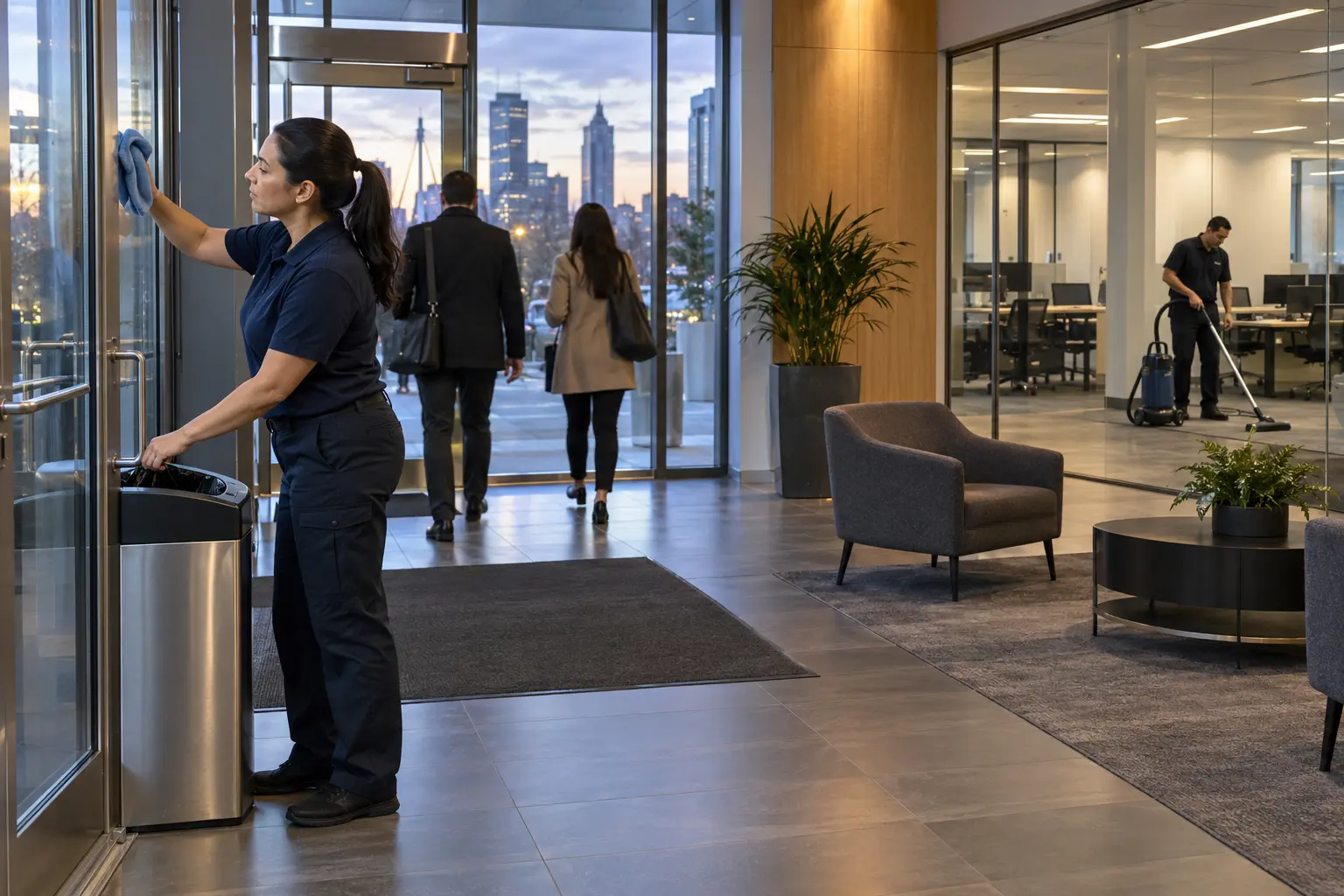
Choosing between day porter and after-hours commercial cleaning depends on when a Winnipeg building experiences its greatest cleaning demand. Daytime coverage addresses visible issues while the building operates, while after-hours service handles scheduled work with fewer occupants present. Some facilities need both models to maintain public areas throughout the day and complete detailed cleaning after closing. Eshine Cleaning Services helps businesses match cleaning schedules to their building operations.
What Is the Difference Between Day Porter and After-Hours Cleaning?
Day porter service provides cleaning support while a building is occupied. Coverage may involve a dedicated shift or scheduled daytime visits, depending on the service agreement. The role focuses on maintaining shared spaces and responding to issues that should not wait until closing.
After-hours cleaning refers to the service window rather than a required cleaning frequency. Nightly, weekly, and customized cleaning schedules may all take place after business hours. The work follows a defined scope intended to prepare the building for its next operating period.
Day porter coverage prioritizes ongoing presentation and timely response. After-hours cleaning prioritizes tasks that benefit from unobstructed access, reduced foot traffic, or additional drying time.
What a Day Porter Handles During Business Hours
A day porter monitors areas where cleanliness changes quickly. Depending on the agreed scope, the role may include entrance upkeep, routine spill response, washroom checks, waste removal, touchpoint cleaning, supply restocking, and tidying lobbies or shared spaces.
Routine spill response does not automatically include bodily fluids, sharps, chemicals, or other hazardous materials. These situations require site-specific procedures, appropriate training, and a defined escalation process.
Restocking responsibilities should also be confirmed before service begins. The agreement should identify who purchases consumables, where supplies are stored, and which items the day porter is expected to replenish.
Day porters maintain cleanliness but do not automatically perform repairs, security duties, or technical building maintenance. Clearly separating these responsibilities prevents facility issues from being assigned to the wrong service provider.
What After-Hours Commercial Cleaning Covers
After-hours commercial cleaning addresses scheduled tasks that are easier to complete when regular activity has slowed or stopped. The scope may include washroom cleaning, floor cleaning, carpet vacuuming, waste collection, surface cleaning, and attention to staff or customer areas.
Not every task is completed during every visit. Each area and cleaning activity should follow the frequency defined in the cleaning plan.
Lower occupancy provides more consistent access to offices, corridors, meeting rooms, and other spaces used throughout the day. It also reduces interference while floors are being cleaned or equipment is operating.
Some buildings remain partially occupied after their public hours end. In these situations, cleaning may be phased by floor, department, or access zone. Entry procedures, alarm instructions, authorized rooms, and building-securement responsibilities should be confirmed before service begins.
When Daytime Cleaning Makes More Sense
Daytime cleaning makes more sense when cleanliness changes continuously during operating hours. Buildings with steady public traffic, frequently used washrooms, busy entrances, food service areas, or active common spaces may need attention before the next scheduled evening clean.
This model also suits facilities where after-hours access is limited. If certain rooms require an escort, remain locked after closing, or cannot be entered by an unsupervised cleaning team, scheduled daytime service may provide a practical alternative.
However, daytime tasks must be selected around building activity. Loud equipment, wet floors, supply carts, and temporarily closed washrooms can disrupt employees, tenants, customers, or visitors. Tasks requiring uninterrupted access or extended drying time may still need to occur after hours.
When After-Hours Cleaning Is the Better Fit
After-hours cleaning is often the better fit when a building has predictable low-occupancy periods and most cleaning needs do not require an immediate response. Offices, professional buildings, retail spaces, and facilities with controlled operating hours may have the main clean completed before the next business day.
This schedule also supports work requiring uninterrupted access. Floor cleaning, carpet care, detailed washroom service, and cleaning across multiple rooms become easier when people are not moving through the work area.
Restricted access does not automatically prevent after-hours service. Facility managers must establish approved entry methods, alarm procedures, key or access-card controls, and any rooms that remain off-limits. Areas unavailable to the cleaning team may require daytime service, an authorized escort, or exclusion from the scope.
When a Commercial Building Needs Both
A combined schedule is useful when a building needs immediate daytime upkeep and a more complete reset after closing. The day porter manages changing conditions in entrances, washrooms, lobbies, and shared spaces. The after-hours team then completes the broader scheduled scope without regular building traffic.
Intentional overlap may be appropriate in high-demand areas. For example, a washroom may receive daytime checks and a detailed evening clean. This overlap should be identified in the cleaning plan so it reflects actual demand rather than accidental duplication.
The two service windows also require a clear handoff. An issue log or reporting process should identify urgent concerns, unfinished tasks, recurring problems, and areas requiring follow-up. This prevents each team from assuming the other has addressed the issue.
Choosing a Schedule Based on Building Operations
The appropriate schedule starts with how quickly each cleaning need must be addressed. Tasks requiring an immediate response belong in daytime coverage. Work requiring unobstructed access, equipment use, or drying time belongs after hours. Buildings with both types of demand need a combined schedule.
Facility managers should assess traffic patterns, public access, washroom use, entrance conditions, restricted areas, and acceptable disruption. Different areas within the same building may follow different service windows.
A commercial cleaning program in Winnipeg should separate service timing, visit frequency, and time allocated per visit. Choosing evening service does not determine whether cleaning occurs nightly or weekly. Those decisions depend on the building’s actual usage and required scope.
The schedule should be reviewed after implementation. Complaints, washroom supply use, recurring problem areas, missed tasks, and repeated requests for immediate cleaning help identify whether coverage should be adjusted.
Seasonal conditions also affect demand. Winnipeg snow, slush, and salt may increase daytime entrance maintenance during winter without requiring permanent changes to the rest of the building’s cleaning schedule.
 Flexible Commercial Cleaning from Eshine Cleaning Services
Eshine Cleaning Services develops customized cleaning plans based on building size, traffic, operating hours, access requirements, and facility priorities. Businesses can determine whether service should occur during operating hours, after closing, or across coordinated service windows.
Before cleaning begins, the plan should confirm the included areas, assigned tasks, service frequency, access procedures, supply responsibilities, reporting process, and response to changing needs. This gives facility managers a defined program instead of relying on assumptions about what each visit includes.
Frequently Asked Questions
What does a commercial day porter do?
A commercial day porter maintains shared and high-traffic areas during operating hours. Depending on the service agreement, the role may include entrance upkeep, routine spill response, washroom checks, waste removal, touchpoint cleaning, and supply restocking.
Is day porter service the same as regular commercial cleaning?
Day porter service is a form of commercial cleaning, but it follows a different service model from scheduled janitorial cleaning. It focuses on occupied-hour maintenance and immediate needs, while scheduled cleaning covers defined tasks at planned intervals. Some responsibilities may overlap.
Is after-hours cleaning appropriate for buildings with restricted access?
Yes, when the facility manager establishes approved entry, alarm, key, access-card, and restricted-area procedures. Rooms unavailable to the cleaning team may require daytime service, an authorized escort, or exclusion from the cleaning scope.
Can a Winnipeg business combine daytime and evening cleaning?
Yes. A combined schedule allows daytime staff to address immediate cleaning needs while the after-hours team completes the broader scheduled service. Responsibilities and intentional task overlap should be documented so work is not missed or unnecessarily repeated.