When to Clean Gypcrete Before Flooring in Calgary
Gypcrete should be cleaned after the dusty and wet trades are finished and the slab has dried, but before moisture testing, priming and the flooring crew arrive. In practice that means one main clean at the end of the dusty work, then a short final clean just before the flooring goes down. The exact dates depend on your gypcrete, adhesive and floor-covering manufacturers, not on a generic number of days.
This guide is for Calgary property managers, general contractors and business owners who are sequencing a commercial fit-out or renovation. It explains where gypcrete cleaning sits in the schedule, why timing matters, and what to put in writing.
TL;DR
- Clean gypcrete after drywall, painting, taping and other dusty or wet trades are done, and once the surface has dried to the manufacturer’s requirements.
- Finish cleaning before moisture testing and priming, so that test results and primer adhesion reflect the real surface.
- Plan a second, lighter clean right before flooring starts, then keep the floor protected.
- A floor that looks clean can still be dusty, chalky or porous. Dust is a bond risk, not just a cosmetic one.
- Follow the written instructions for your specific gypcrete, adhesive and flooring. There is no universal waiting period.
Table of Contents
- What gypcrete is, and why cleaning it is not optional
- The short answer: where cleaning sits in the sequence
- Why cleaning comes before moisture testing and priming
- Timing by flooring type
- Calgary-specific timing factors
- A worked example
- Common mistakes that cost time and money
- What to give your cleaning contractor before they quote
- Floor finish decisions and the schedule
- Our perspective
- Getting the gypcrete clean scheduled with Eshine
- FAQ
- Sources
What gypcrete is, and why cleaning it is not optional
Gypcrete is a poured gypsum-based underlayment. It is usually laid over a structural floor to level it and add fire and sound performance, and finished flooring goes on top. It is not automatically the finished floor. Flooring-industry guidance describes gypsum concrete as a substrate that must be flat, sound, clean and dry, and notes that dusty or porous surfaces can interfere with adhesive contact and cause bond problems.
Manufacturers say the same thing in plainer terms. USG’s installation guide for its self-leveling gypsum underlayments states that before any floor treatment or floor covering goes on, surfaces must be free of oil, paint, chemicals, wax, grease, dust, dirt and construction debris.
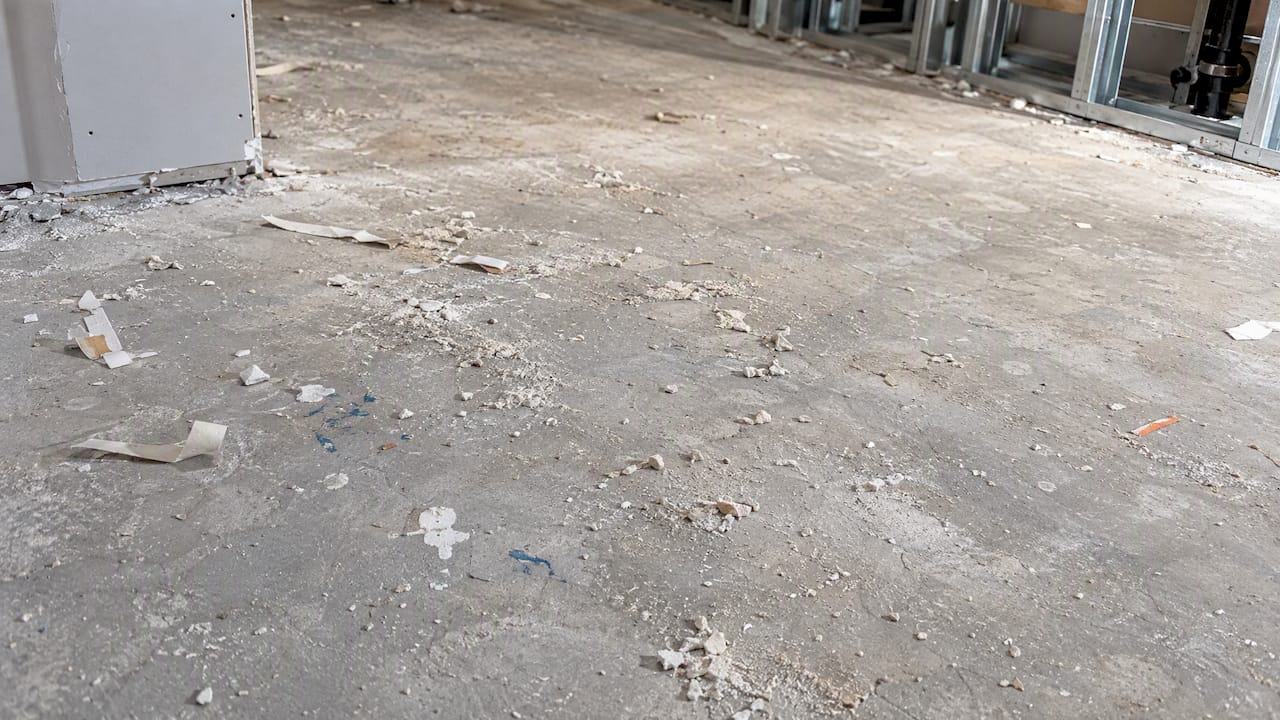
That is the whole reason the timing question matters. Gypcrete sits in the middle of a building project where drywall dust, paint overspray, tape offcuts and trade traffic all land on it. Cleaned too early, it gets dirty again. Cleaned too late, the flooring crew is left to deal with it, or worse, installs over it.
The short answer: where cleaning sits in the sequence
A typical commercial sequence in Calgary looks like this. Your project will differ, so treat it as a frame to adapt.
- Gypcrete is poured and cures. Heating and enclosure matter here. The ASTM-referenced guidance reproduced in this underlayment specification calls for the building to be enclosed with adequate ventilation and heat held above 10°C (50°F) before, during and after installation so the product can dry.
- Wet and dusty trades finish. Twelve Oaks’ engineered flooring instructions say to ensure other wet trades such as drywalling, plastering, painting, texturing, tiling and concrete or masonry work are completed before the flooring is introduced.
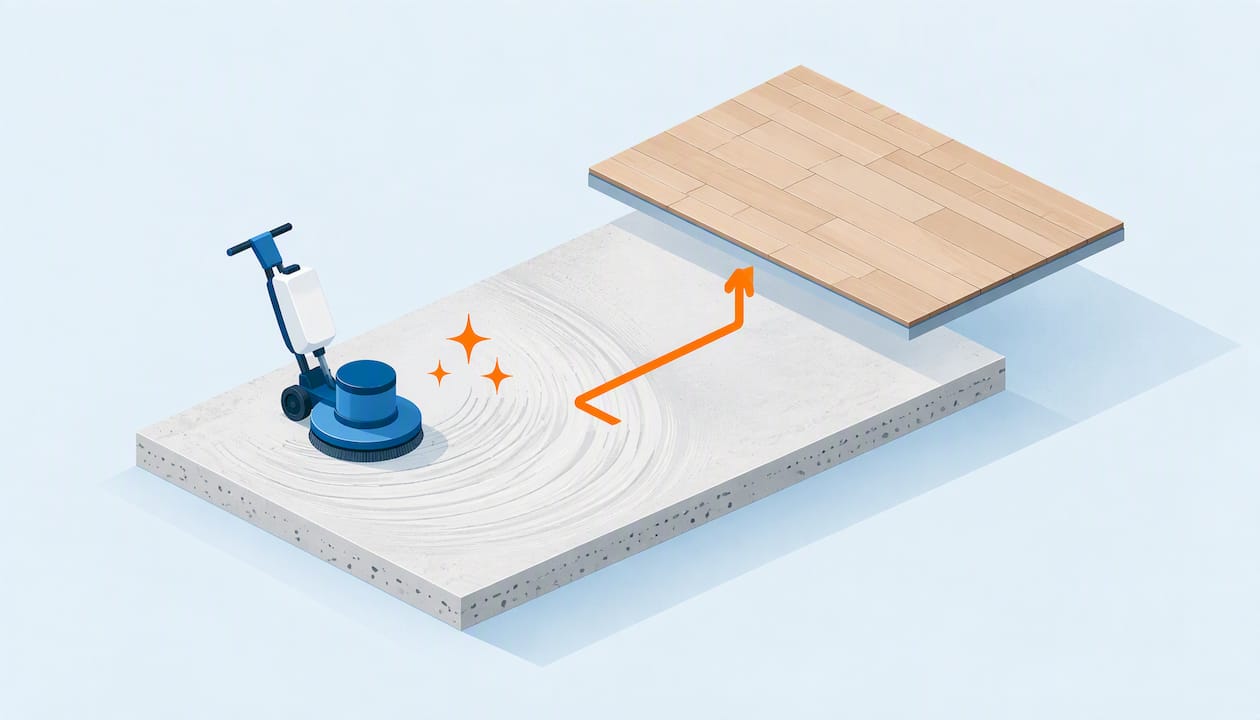
- Main gypcrete clean. This is the thorough pass: debris removal, HEPA vacuuming and controlled cleanup of the whole surface.
- Inspection, moisture testing and priming. Done on the clean surface, with readings recorded.
- Short pre-install clean. A final dust removal immediately before adhesive or underlayment goes down.
- Flooring installation, with the floor protected afterwards.
The key rule: the main clean comes after the last trade that can dirty the floor and before anyone tests, primes or glues anything.
Why cleaning comes before moisture testing and priming
It is tempting to test moisture first because the slab has been sitting for weeks. But dust and residue change what you are measuring and what the primer sees.
USG’s guidance identifies a moisture meter as the way to establish that the underlayment is dry, and says floor coverings and primers should wait until dryness is established. A test taken on a dusty, debris-covered surface is harder to trust, and a primer applied over dust bonds to the dust.
The Kentwood guidance flags a counterintuitive risk. A porous gypcrete surface can pull water out of the adhesive too quickly, while chalky dust stops the adhesive from touching sound material. Looking at the floor will not tell you which problem you have. That is why a proper closeout covers more than a visual check:
- inspect for weak or powdery areas, cracks, voids and contamination;
- test moisture and record the locations and readings;
- confirm with the flooring manufacturer that your adhesive and primer suit the surface.
Cleaning is the step that makes the other three meaningful.
Timing by flooring type
The cleaning window moves depending on what is going on top.
Hardwood and engineered wood
Wood is the most schedule-sensitive. Twelve Oaks’ Canadian installation instructions recommend jobsite conditions of 35% to 55% relative humidity and 18°C to 27°C, held for 48 hours before, during and after installation. The flooring has to reach moisture equilibrium with the space.
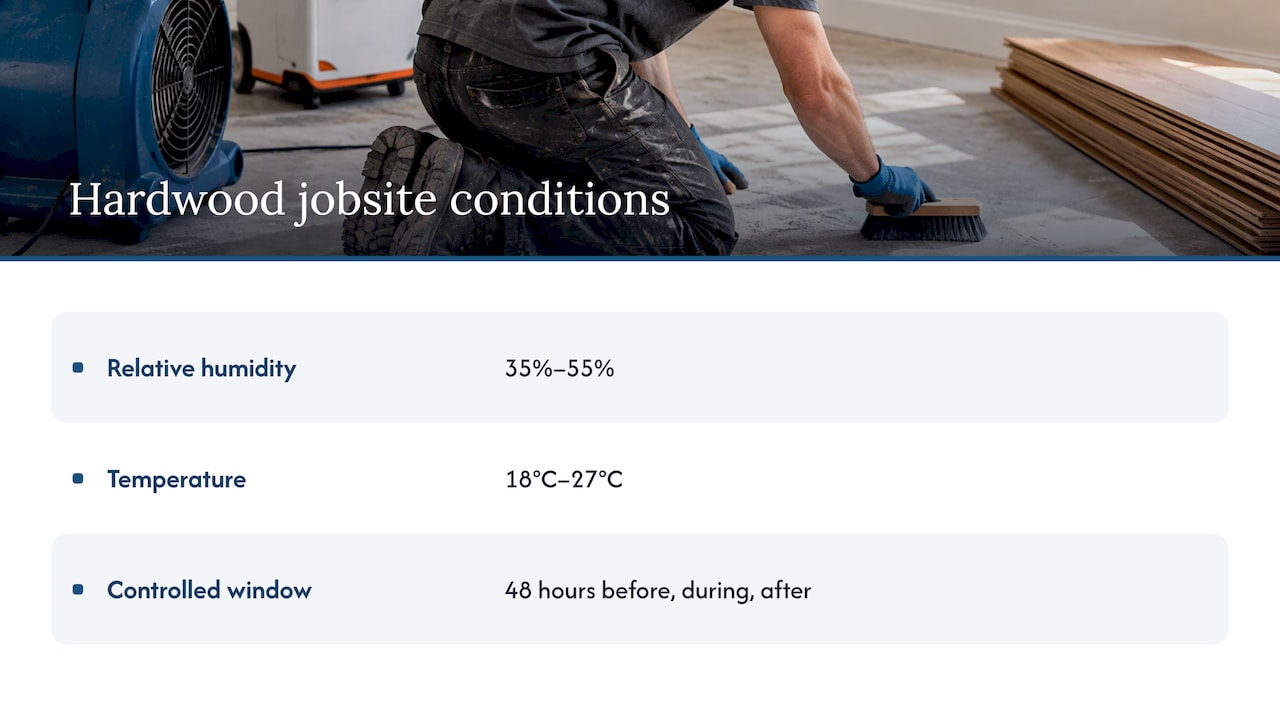
So the main clean should be complete before that controlled window begins. Opening up the space, running wet cleaning or letting trades back in during acclimation works against the whole exercise. There is also no universal acclimation period. The commonly repeated “rule of 3” is no substitute for the manufacturer’s written instructions for your product.
Resilient flooring: vinyl plank, sheet and tile
Thin, resilient products telegraph what is beneath them. A crumb or a lump under luxury vinyl can show through, and installers of locking systems also require a constant temperature before, during and after installation. One manufacturer’s hybrid resilient locking installation guide says substrates must be structurally sound, dry and clean. Plan the main clean, then a careful pre-install clean, since the final surface needs to be free of anything that could print through.
Carpet tile and glue-down products
Adhesive-dependent flooring is where dust does the most damage, because the whole system relies on contact between adhesive and substrate. Treat the cleaning and priming sequence as a single controlled operation, with the flooring manufacturer’s approval of the adhesive and primer on record.
Calgary-specific timing factors
Winter, heat and enclosure
Calgary schedules often run through cold months. Gypcrete needs the building enclosed and heated to dry, as noted above, and a space that is not yet fully enclosed will not give you reliable dryness or a stable surface. If your project is moving through winter, build the cleaning and testing dates around when the envelope and heating are actually in place, not around the Gantt chart. Our note on how Calgary weather affects post-construction cleaning goes into the practical side.
Code and closeout responsibilities
The City of Calgary states that commercial spaces must comply with the National Building Code, 2023 Alberta Edition and applicable safety codes. Cleaning does not replace inspections, but it belongs in the same closeout conversation as permits and handover.
On dust, the City’s Contractor Environmental Responsibilities Package calls for controlling dust, dirt tracking and debris accumulation throughout construction. It is written for City contractors, but the discipline it describes is a sound benchmark: work top-down, remove debris and leave floors, ledges and walls clean enough that later trades and occupants are not exposed to residue.
Occupied or shared buildings
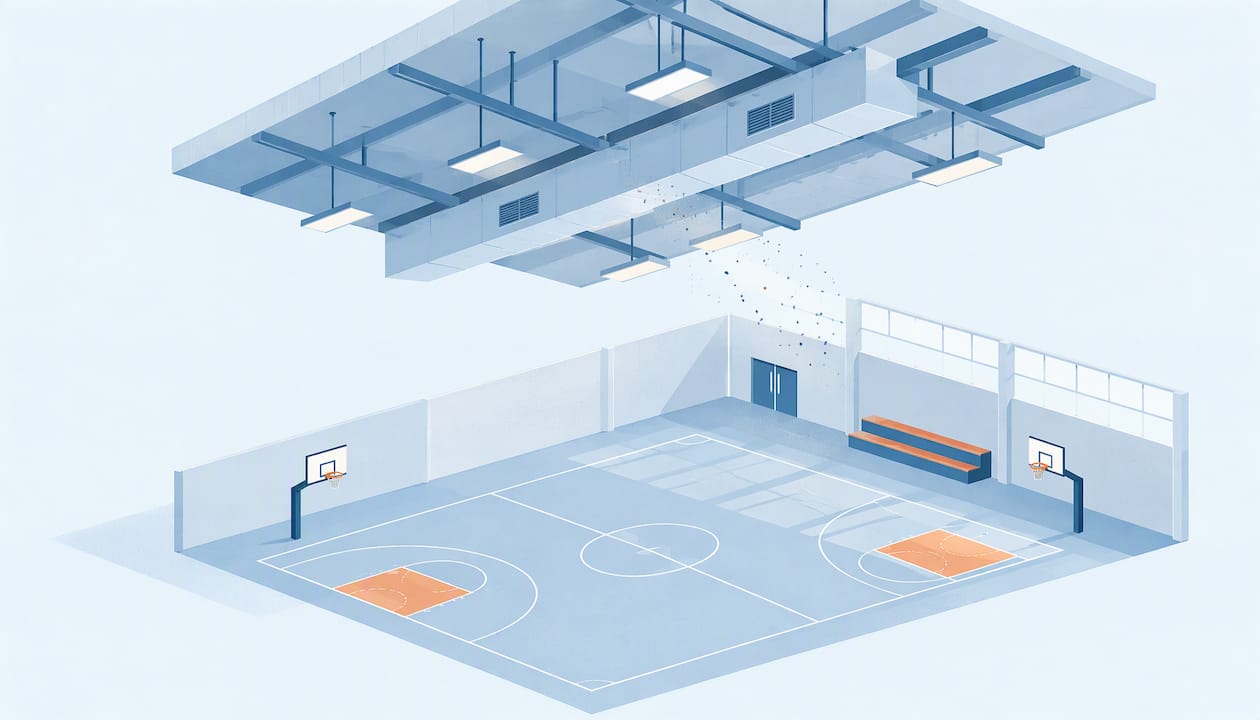
If part of the building is live, the cleaning method matters as much as the date. Avoid dry sweeping or compressed air, which put fine dust back into the air. Use HEPA extraction and controlled cleanup instead. We explain how fine dust travels in post-construction dust in Calgary buildings and why it lingers in this piece on post-construction dust in Calgary.
A worked example
Imagine a tenant improvement on a mid-rise Calgary office floor. This is an illustration, not a client case.
- Week 1: gypcrete poured and left to cure with heat on.
- Weeks 2 to 4: framing, drywall, taping and sanding, then paint. Floors are covered where possible.
- Week 5: ceiling work and final trades wrap. Gypcrete is now exposed to the last of the dust.
- Week 5, end: main gypcrete clean with HEPA equipment. Debris, drywall dust and paint residue go.
- Week 6, start: moisture testing at recorded locations, inspection for powdery or weak areas, primer approved by the flooring manufacturer.
- Week 6, end: short pre-install clean, then flooring crew starts.
If the drywall finishers had been scheduled after the main clean, the clean would have been wasted. That is the usual failure: cleaning booked by calendar date rather than by trade completion.
Common mistakes that cost time and money
- Cleaning before sanding is done. Fine drywall dust settles on everything and gets walked across the slab.
- Testing moisture on a dirty surface. The reading is harder to trust and gets challenged later.
- Assuming it looks clean enough. A visual check can miss powdery, porous or contaminated areas.
- Leaving cleanup to the flooring crew. Installers are there to install, and their warranties often depend on the substrate being accepted as ready.
- Copying a waiting period from the internet. Acceptable moisture and curing conditions are specific to the gypcrete, adhesive and flooring in your project.
- No protection after cleaning. Once cleaned, keep trades off the surface or cover it.
Rushed closeouts also create rework. Our article on the risks of rushed post-construction cleaning in Calgary covers how that plays out.
What to give your cleaning contractor before they quote
A cleaning contractor can only fit the work to your schedule if they know it. Send:
- the construction schedule, with the dates for the last wet and dusty trades;
- site access rules and hours, plus any elevator or loading dock limits;
- waste-disposal instructions;
- the flooring specification, including the adhesive and primer;
- any hazardous-material information;
- who will carry out moisture testing and when.
For a wider view of what a closeout clean should cover, see our post-construction cleaning checklist and what post-construction cleaning includes.
Floor finish decisions and the schedule
The finish you choose changes how forgiving the substrate is, which in turn changes how tight your cleaning window needs to be. An Australian tenant advisory has a useful overview of choosing floor finishes for an office fit-out. It is written for Sydney, so check local codes and supplier lead times in Calgary, but the idea of settling the finish early so the substrate work can be planned around it applies anywhere.
Our perspective
We clean gypcrete on commercial projects in Calgary, and the most common problem we see is not dirty floors. It is a clean booked at the wrong moment. Someone puts it in the schedule by date, a trade runs late, and the floor is dirty again by the time the flooring crew shows up.
Our advice is to tie the main clean to a trigger, not a date: the last dusty trade signs off. Then give the cleaners a clear, short window before testing and priming. We would rather come back for a light pre-install pass than have anyone glue flooring over a surface nobody has looked at properly.
We have been doing commercial work since 2012, we are privately owned rather than a franchise, and we plan each job around the facility and the people who have to work in it afterwards. That is why we ask for the flooring spec and the schedule up front. The cleaning method, the equipment and the number of passes all depend on them.
— Jack
Getting the gypcrete clean scheduled with Eshine
We provide gypcrete cleaning in Calgary as part of our commercial and post-construction work, and we can plan it around your trade handovers. If you are managing a larger building, see how we approach gypcrete cleaning on multi-storey commercial projects. Send us your schedule and flooring specification through eshinecleaning.com and we will build a plan around it. Our services are certified and insured, and we have completed over 700 projects.
FAQ
How long after pouring can gypcrete be cleaned?
It depends on the product and site conditions. Cleaning can begin once the surface is hard enough to work on and dusty trades are finishing, but the readiness for flooring is set by dryness, not by the calendar. Check the gypcrete manufacturer’s instructions and the moisture readings.
Do I need to clean gypcrete if the flooring crew will sweep it?
Yes. Sweeping is not a substitute for a thorough clean, and dry sweeping can put fine dust back in the air. Dust and residue are what manufacturers tell installers to remove before any floor treatment or covering. A main clean followed by a short pre-install pass is safer.
Can gypcrete be the finished floor?
It is mainly used as an underlayment for finished flooring, not as the finished floor itself. Treat it as a substrate that has to be clean, dry, sound and flat before anything goes on top.
Who decides how long flooring must acclimate?
The flooring manufacturer. For example, one Canadian engineered hardwood maker specifies 35% to 55% relative humidity and 18°C to 27°C for 48 hours before, during and after installation. Other products differ, so use the written instructions for yours.
Should cleaning happen before or after moisture testing?
Before. Clean first so the test and the primer are working on the real surface, then record readings and locations. Do a short final clean just before flooring starts.
Sources
- USG Levelrock and Durock self-leveling gypsum underlayments: finished flooring preparation and installation guidelines
- Kentwood pro tips: Sticking It to Gypsum Concrete
- Underlayment specification referencing ASTM F2678 project conditions
- Twelve Oaks engineered installation instructions (2026)
- Twelve Oaks engineered installation instructions (2025)
- Hybrid resilient locking installation system guide
- The City of Calgary: commercial building code
- The City of Calgary: Contractor Environmental Responsibilities Package