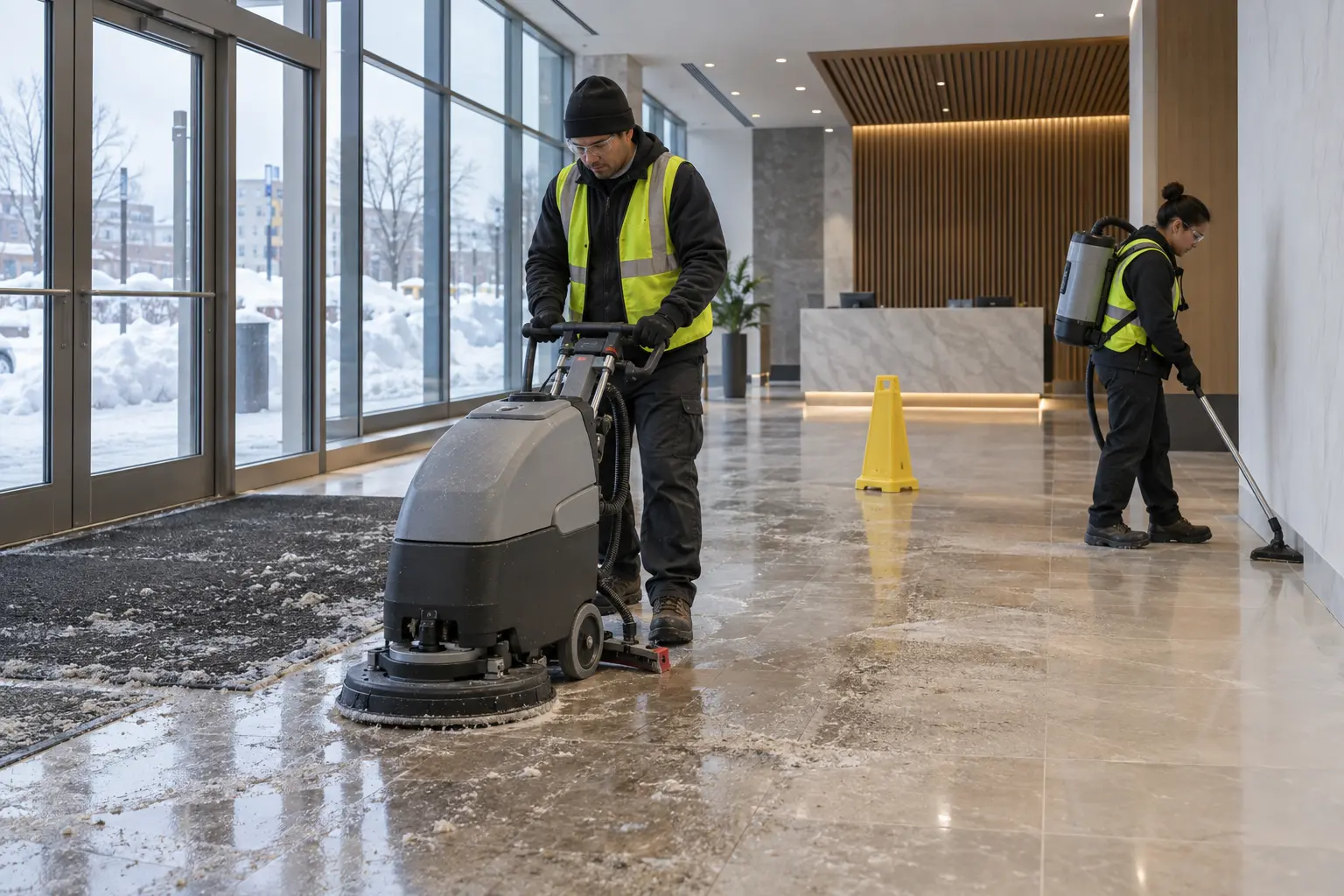
Winter post-construction cleaning for Winnipeg commercial buildings requires additional planning around site readiness, indoor temperatures, moisture, and weather-dependent work. These conditions affect which cleaning tasks can proceed, how long surfaces need to dry, and whether exterior work must be scheduled separately. Eshine Cleaning Services considers these factors when defining the cleaning scope and turnover schedule.
How Winnipeg Winter Conditions Affect a Final Clean
A winter final clean should begin after major dust-producing work is complete and the areas being cleaned are protected from ongoing construction activity. Exterior openings should be secured so snow, moisture, and uncontrolled airflow do not affect completed interior spaces.
Project teams should also confirm which trades, deliveries, inspections, and equipment movements will continue after cleaning. If workers still require access through completed areas, the schedule may need phased cleaning followed by a defined touch-up rather than one final visit.
The building does not need to be fully occupied or commissioned before every cleaning task begins. However, the conditions must support the specific work being performed. This distinction helps contractors avoid scheduling wet cleaning, carpet extraction, or floor finishing before the building is ready.
Snow, Salt, and Moisture at Building Entrances
Building entrances receive concentrated amounts of slush, meltwater, mud, salt, and grit during winter construction. These materials spread from vestibules into corridors, elevator lobbies, and nearby rooms when crews continue entering the building.
Loose grit should be vacuumed or removed before damp cleaning begins. Otherwise, abrasive particles may be dragged across the floor during mopping or equipment use. Remaining salt residue can then be cleaned with a method and product suitable for the installed flooring.
Temporary walk-off mats and designated access routes help contain moisture. Mats must be maintained and replaced when saturated because wet mats stop capturing debris and may transfer moisture onto finished flooring.
Entrance cleaning completed before construction traffic ends may need additional attention before turnover. The project scope should identify whether repeated cleaning or a final touch-up is included after contractors leave the site.
Cleaning Floors During Cold-Weather Construction
Floor-cleaning methods must reflect the flooring material, installation status, manufacturer requirements, and indoor conditions. A single process should not be applied across concrete, resilient flooring, and carpeted areas.
Professional post-construction cleaning in Winnipeg generally begins with loose debris, grit, and construction dust removal. Wet cleaning, residue treatment, or finishing follows only when the surface and surrounding conditions are suitable.
Concrete and unfinished surfaces
Unfinished concrete often retains fine construction dust in its pores and surface irregularities. Dry debris and grit should be removed before water is introduced so the material does not become a film or spread into adjacent rooms.
Cleaning decisions depend on the concrete’s curing status, surface temperature, moisture condition, and any applied sealer or coating. Project teams should also identify paint, adhesive, joint compound, or other hardened residue before cleaning begins.
Routine cleaning methods may not remove adhered construction material. Mechanical or chemical treatment should be approved before use because an aggressive process may alter the appearance or texture of porous concrete. The agreed scope should identify whether this residue removal belongs to the cleaning contractor or another trade.
Newly installed resilient flooring
New vinyl and other resilient flooring should not receive wet cleaning until the applicable adhesive-curing period has passed. Flooring manufacturer instructions, adhesive specifications, installer requirements, and warranty conditions determine when cleaning may begin.
If turnover is scheduled before the floor is ready for wet cleaning, loose debris and grit may still be removed using an approved dry method. Damp cleaning or finishing should be deferred until the installation requirements permit it.
Salt and grit require prompt removal because foot traffic and equipment can grind abrasive particles into the finish. Strip-and-wax work should not be assumed to form part of the final clean. Its suitability depends on the flooring material and the approved project specifications.
 Carpeted areas
Carpet should remain protected while trades continue moving through the area. Removing protection too early exposes the carpet to construction dust, wet footwear, salt, and material deliveries.
Vacuuming addresses dry construction dust, loose grit, and salt crystals. Visible staining may require spot treatment, while absorbed moisture or widespread contamination may require extraction. The selected process must reflect the carpet material and the type of residue present.
Carpet extraction should be scheduled only when the building provides adequate drying conditions. Damp carpet should not be covered, furnished, or released for occupancy before it has dried sufficiently.
Heating and Ventilation Considerations
Permanent heat is not required for every cleaning task. Dry dust removal and surface detailing may proceed when the work area is safe and the equipment can operate properly. Water-based cleaning, carpet extraction, and floor-finishing products generally require more controlled conditions.
Temporary construction heat does not always create the same conditions as an operating permanent HVAC system. The heating method may affect indoor humidity, airflow, dust movement, and drying time. Cleaning plans should therefore reflect the heat source in use rather than relying only on the displayed air temperature.
Product labels, equipment instructions, flooring requirements, and the site safety plan should determine whether conditions are suitable. Surface temperature also matters because floors, exterior walls, and entrance areas may remain colder than the surrounding air.
HVAC operation should be coordinated with the general contractor or building representative. Running the system before major dust-producing work ends may redistribute fine particles into cleaned areas. Filter changes, commissioning, and cleaning of accessible vents should be sequenced so the system does not immediately reintroduce construction dust after the final clean.
Limited winter ventilation may extend drying times. The schedule should allow wet surfaces to dry under the building’s actual conditions instead of assuming that doors or windows can be opened.
When Exterior Glass May Need Separate Scheduling
Exterior glass cleaning depends on wind, precipitation, surface temperature, ice, access conditions, direct sunlight, and the proposed cleaning method. These factors must be assessed on the scheduled service date.
The work should be postponed when water could freeze on the glass, frames, equipment, walkways, entrances, or surrounding surfaces. Unsafe roof conditions, icy access routes, and falling snow may also prevent exterior cleaning even when other parts of the project remain accessible.
Newly installed windows require an additional review for sealants, labels, protective film, and adhered construction residue. Removing these materials may require approval from the window supplier or general contractor to prevent damage to the glass, coatings, or frames.
There is no universal temperature cutoff for every building and cleaning method. When conditions are unsuitable, interior glass and the remaining final clean may proceed while exterior glass is documented as a separate scope item for a later visit.
How to Protect Cleaned Areas Before Turnover
Completed areas remain vulnerable when contractors, inspectors, movers, or equipment continue passing through the building. Protection should reflect the remaining activity and the flooring installer’s requirements.
Practical controls include:
- Establishing one designated construction entrance
- Using dry, non-staining floor protection approved for the installed material
- Replacing saturated entrance mats
- Restricting access to completed rooms
- Scheduling material deliveries before the final clean
- Inspecting protection throughout the remaining work
- Completing a documented walkthrough after the last trades leave
Protection should not trap moisture, transfer colour, damage the finish, or leave adhesive residue. The project team should assign responsibility for installing, inspecting, replacing, and removing each protective material.
The cleaning scope should also establish a sign-off point. Contamination introduced after that inspection may require a separately scheduled touch-up instead of being treated as part of the original final clean.
For completed hard surfaces that require restoration or finishing beyond routine cleaning, the project team should confirm whether specialized Winnipeg floor care is included.
Plan Winter Post-Construction Cleaning with Eshine Cleaning Services
Winter cleaning should be scheduled around the site’s actual readiness rather than the intended occupancy date alone. Before requesting an estimate, project teams should confirm the building size, floor types, current construction phase, remaining trades, heating status, access routes, turnover date, and exterior glass requirements.
The estimate should clearly identify whether the work includes construction debris, adhered residue removal, floor finishing, protective coverings, exterior glass, and return visits. Defining these items prevents routine final cleaning from being confused with specialized restoration or repeated cleaning caused by ongoing construction. Eshine Cleaning Services reviews the building layout, installed finishes, site access, remaining construction activity, and turnover requirements before confirming the scope.
Frequently Asked Questions
Can post-construction cleaning be completed during a Winnipeg winter?
Yes. Interior post-construction cleaning can proceed when the building is enclosed, the work areas are safe, and the installed surfaces are ready for the required cleaning methods. Exterior work and moisture-sensitive tasks may follow a different schedule.
Does the commercial building need working heat before cleaning begins?
Not for every task. Dry debris removal and detailing may proceed without permanent heat when conditions are safe. Wet cleaning, carpet extraction, and floor finishing require temperatures and drying conditions that meet the relevant product, equipment, and flooring requirements.
How is tracked-in salt handled during a final clean?
Loose salt and grit are removed before damp cleaning begins. Remaining residue is then treated with a surface-compatible process. Entrances may require a final touch-up if workers continue using them after the initial cleaning.
Can exterior windows be cleaned during freezing weather?
Exterior window cleaning depends on the cleaning method, surface temperature, wind, precipitation, ice, and access safety. If water could freeze around the work area or safe access cannot be maintained, the exterior glass should be scheduled separately.