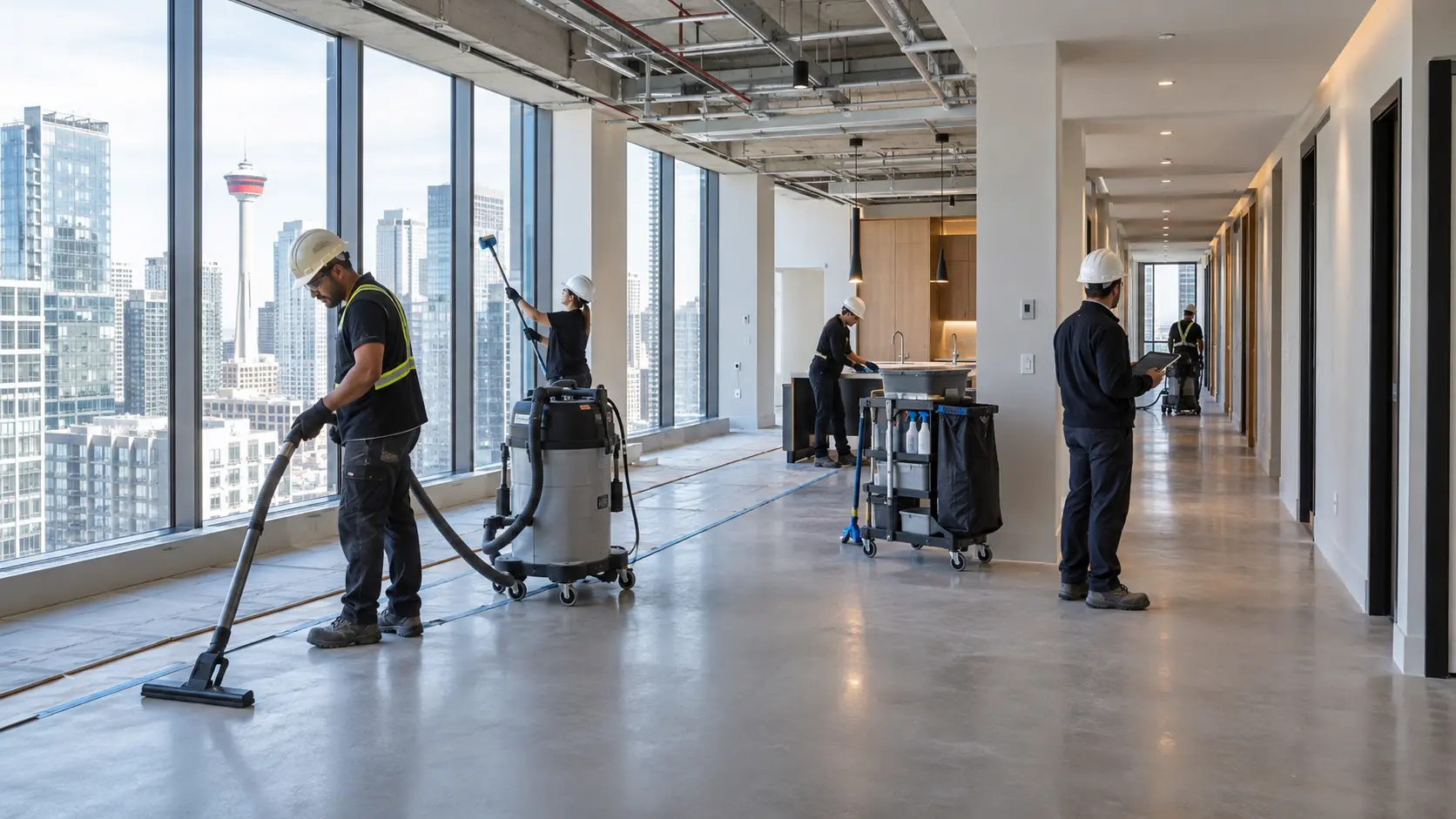
What affects the cost and scope of post construction cleaning in Calgary?
The cost and scope of post-construction cleaning in Calgary depend on more than floor area. Site condition, required cleaning level, access, schedule, and the number of cleaning stages all affect the quote. Two projects with the same square footage can require very different labour hours and equipment. Downtown loading restrictions, limited parking, occupied commercial sites, and winter access can create additional constraints. These factors matter when they affect movement, working hours, or exterior tasks. A complete quote therefore needs to define the included areas, cleaning stages, access requirements, assumptions, exclusions, and turnover criteria. Eshine Cleaning Services uses those project details to scope commercial construction cleaning in Calgary.
Why square footage does not determine the full cleaning cost
Square footage indicates the size of the work area. It does not show how much material must be removed or how difficult each surface is to reach. It supports comparisons only when the spaces have similar conditions, finishes, access, and turnover requirements.
Dust load, residue, finish level, and remaining trade activity
A lightly dusty area with protected finishes requires less work than one containing settled construction dust and residue. Adhesive, paint spots, labels, and unremoved protection add separate tasks. The expected finish level also matters. Preparing a zone for the next trade is a different scope from delivering a presentation-ready space for an owner inspection or occupancy.
Cleaning completed while trades remain active needs separate planning. Cutting, sanding, installation, and worker traffic can reintroduce dust or mark cleaned surfaces. The quote may therefore limit the clean to specific released areas, include later touch-ups, or schedule detailed work after dust-producing activity ends.
Building height, access, utilities, and deadline pressure
High ceilings, elevated ledges, tall interior glass, and overhead fixtures increase the time and access equipment required. The assessment must identify whether workers can use ladders safely or whether lifts, scaffolding, or other access arrangements are needed. Floor-loading restrictions can prevent lifts or heavier equipment from entering certain areas. The quote should state whether specialized access equipment is provided by the client, supplied by the cleaning company, or priced separately.
Site access changes productive working time. Controlled entrances, freight-elevator bookings, limited loading areas, security procedures, and restricted work hours can slow movement through the building. The quote should also confirm whether usable power, water, lighting, and washroom access will be available during each shift. Missing utilities can require temporary services, alternate equipment, rescheduling, or revised productivity assumptions.
A tight deadline does not merely make the same work happen faster. It may require a larger crew, extended shifts, simultaneous work zones, or additional supervision. Site conditions may prevent those measures. In that case, the cleaning level or handover sequence must be adjusted instead of compressing the original scope without accounting for the constraint.
Project details that change labour and equipment requirements
The quote must translate the physical site into workable tasks. Property layout, surface types, residue, and debris determine the cleaning methods, crew allocation, and equipment needed to complete those tasks without damaging new finishes.
Property type, floor plan, ceiling height, and glass area
An open warehouse, divided office, retail unit, institutional building, and multi-unit development each create different movement and detailing requirements. Numerous rooms, stairs, washrooms, millwork components, and service areas increase edge work and repeated setup even when the total floor area is modest.
Ceiling height and glass area should be measured separately from floor area. Interior partitions, storefront glazing, mirrors, frames, and high-level surfaces add detailed work that a basic square-foot calculation does not capture. Glass quantity and condition are separate variables because protective film, labels, silicone, paint, or other residue can change the removal method. Exterior or elevated glazing should be identified as a separate inclusion with a defined access method rather than assumed to be part of interior cleaning.
Gypcrete dust, adhesive, labels, paint spots, and debris volume
Fine gypcrete dust requires controlled extraction and careful removal from edges, seams, and adjacent surfaces. Dry sweeping can redistribute the dust instead of removing it. Where flooring installation is scheduled, the responsible trade should confirm the required surface condition. Cleaning removes contamination but does not correct an improperly installed or damaged underlayment. Eshine provides dedicated gypcrete cleaning services in Calgary for this stage of commercial construction.
Adhesive, labels, paint spots, grout haze, and similar residues require identification before work begins. The removal method must suit the affected material, since aggressive scraping or incompatible chemicals can damage glass, flooring, frames, fixtures, or coatings. When the residue or finish compatibility cannot be verified, testing, client approval, separate authorization, or exclusion may be required before removal proceeds.
Debris volume affects handling time, collection equipment, and disposal arrangements. A cleaning quote should state whether it includes only small loose material or also larger construction waste. It should also assign responsibility for bins, movement to the disposal point, hauling, and disposal fees. Suspected or identified hazardous material requires prior classification and an appropriate handling scope rather than inclusion as ordinary debris.
How cleaning stages affect the quote
Each cleaning stage serves a different point in the construction schedule. Rough clean, detailed clean, and final clean do not have universal task lists. The quote must therefore define the included work and expected result for each stage. This prevents preliminary cleaning from being mistaken for final turnover cleaning.
Rough clean, detailed clean, final clean, and touch-up visits
A rough clean removes loose debris, packaging, and heavier surface contamination so work areas are safer and ready for subsequent activity. It does not deliver finished surfaces suitable for turnover.
A detailed clean addresses settled dust and specified construction residue after major dust-producing work is complete. A final clean addresses the presentation-level work required once installation is finished, protection is removed, and the space is released for inspection or occupancy. The actual tasks belong in the scope because some projects combine these stages while others separate them.
Touch-up visits address limited dust, fingerprints, marks, or minor contamination introduced after the final clean. They are not a substitute for cleaning unfinished zones or repeating work affected by significant trade activity. The quote should specify how many visits are included, which areas qualify, and what triggers additional work. Deficiencies within the agreed final-clean scope should also be distinguished from new contamination created after cleaning.
One complete turnover versus phased handovers
A single turnover allows the cleaning team to work through a fully released site in a planned sequence. This generally reduces repeated mobilization, equipment movement, protection, and inspection compared with cleaning the same total area across several releases.
Phased handovers divide the project into zones, floors, units, or milestones. Each phase needs its own access window, readiness confirmation, cleaning sequence, and sign-off. Shared corridors, elevators, entrances, and mechanical routes require particular attention because ongoing construction traffic can pass through already cleaned areas.
The quote should identify the number and approximate size of phases rather than treating them as one continuous visit. Late releases, partial access, or changes to the handover order can affect crew scheduling and create work outside the original assumptions.
Information to provide when requesting a quote
A useful quote request provides enough information to estimate labour, select equipment, identify exclusions, and assess the deadline. Plans establish scale, but they do not show actual dust, residue, damage, or trade progress. Current photographs or a site walkthrough help verify those conditions.
Provide the following information:
- Plans or an area schedule showing the spaces included in the request
- Current site conditions, supported by recent photographs or a walkthrough
- Required cleaning stages, anticipated visit count, completion date, work hours, and handover sequence
- Remaining trades and the expected end of dust-producing work
- Finish types, including flooring, glazing, millwork, fixtures, and sensitive coatings
- Ceiling heights, elevated surfaces, and the interior or exterior glass included
- Access restrictions, elevator or loading bookings, security requirements, available utilities, and responsibility for access equipment
- Expected debris volume, available bins, hauling responsibility, disposal fees, and excluded waste
- Release conditions, including whether trade personnel, tools, materials, or surface protection will remain
- Required cleaning level and the inspection or acceptance standard for each stage
The request should also identify who can approve scope decisions and sign off completed areas. If the site is not ready for a firm assessment, the quote can state its assumptions and the conditions that must be verified before scheduling.
Why an incomplete scope creates change orders or missed work
An incomplete scope transfers important decisions from the quoting stage to the job site. Undefined surfaces, residues, stages, or access conditions can leave required work unpriced. The contractor may also expect tasks that were never included. This leads to additional authorization, schedule disruption, or unresolved deficiencies.
 Defining inclusions, exclusions, and acceptance criteria
Inclusions should identify the areas and surfaces to be cleaned, the cleaning stage, the required result, and any return visits. Exclusions should identify work outside the assignment. Relevant examples include bulk debris, hazardous materials, exterior glazing, inaccessible surfaces, active trade areas, and residue requiring a specialist method. Existing scratches, stains, coating defects, damaged finishes, and residue that cannot be safely removed should be documented before cleaning begins.
Acceptance criteria make completion measurable. They can identify the dust, labels, specified residue, streaks, or loose debris that must be removed from accessible surfaces. The criteria should also state the inspection lighting. The scope should identify inaccessible or concealed surfaces that cannot be inspected or cleaned. A responsible representative should inspect released areas within the agreed sign-off period. Deficiencies should be documented before other trades or occupants re-enter the area.
A change-order process should state who can authorize added work and how schedule effects will be handled. Added areas, different residue, extra cleaning stages, delayed access, unavailable utilities, changed handover dates, or renewed contamination can trigger a change. Defining these conditions separates additional work from corrections to the original scope.
Requesting a Calgary post-construction cleaning assessment from Eshine
Send Eshine Cleaning Services the available plans, photographs, schedule, and site-contact information to begin the assessment. Clear photographs and complete project details may be sufficient for a straightforward, well-defined area. A walkthrough is appropriate when residue, access, debris, high-level work, active trades, or phased releases cannot be verified remotely.
Before scheduling, confirm that the assessed scope matches the construction schedule, released work areas, and required turnover condition. Learn more about Eshine’s post-construction cleaning in Calgary or request a project-specific assessment.
Frequently asked questions
How is post-construction cleaning priced in Calgary?
Post-construction cleaning is priced from the labour, equipment, access, disposal, stages, and schedule required by a defined scope. Depending on project certainty, a quote may use a fixed amount, separate phase pricing, allowances for uncertain work, or authorized rates for changes. Taxes, disposal, specialized access, and return visits should be shown as included or additional.
Does square footage determine the full quote?
No. Square footage measures the included area, while the quote reflects the effort and resources required to clean it to the agreed condition.
What information is needed before a cleaning company can scope the project?
The company needs the included areas, current condition, cleaning stages, schedule, access, utilities, debris responsibilities, finish information, and acceptance criteria. Plans and photographs support the scope, while uncertain conditions may require a walkthrough.
Why do phased handovers and tight deadlines affect the cost?
Phased handovers require repeated mobilization and sign-off for separate releases. Tight deadlines may require additional crews, shifts, or supervision, increasing the resources needed to meet the same turnover condition.