Post construction cleaning for Calgary auto dealership renovations and new builds
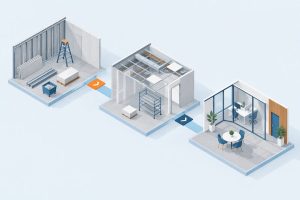
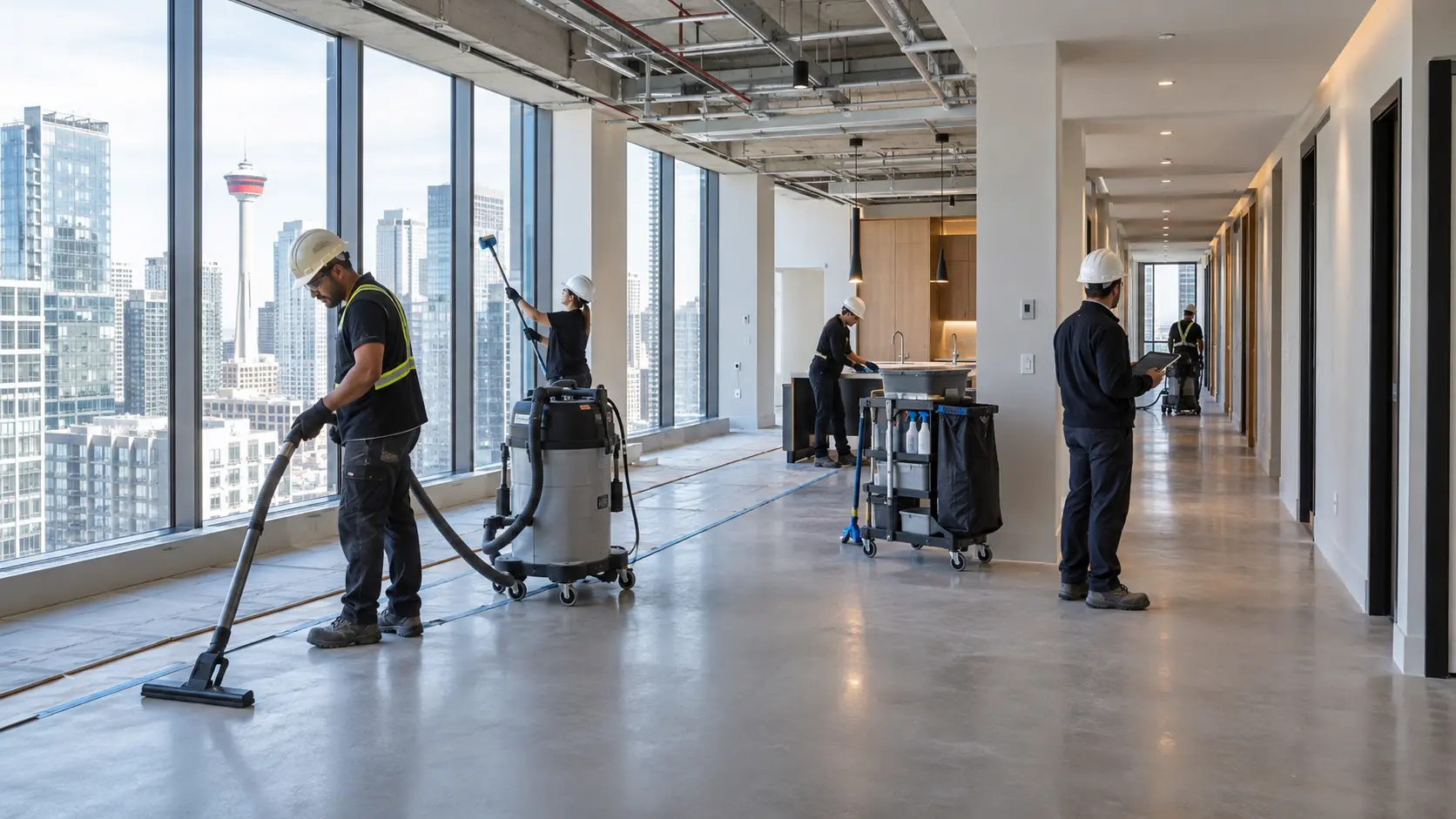
Post-construction cleaning for Calgary auto dealership renovations and new builds prepares the completed property for vehicle placement, staff setup, customer access, and final handover. The scope must account for showroom glass, reflective finishes, customer-facing rooms, operational areas, and the transition between public and service spaces. Eshine Cleaning Services provides commercial turnover cleaning for new and renovated dealership properties in Calgary.
Why dealership construction requires a detailed turnover clean
A turnover clean is the detailed cleaning completed after construction work and bulk debris removal. It differs from rough cleaning during construction and from correcting trade deficiencies such as scratched glass, damaged flooring, incomplete sealant, or paint defects.
Dealerships require a room-specific scope because the installed materials, visibility, and intended use vary throughout the building. The agreed acceptance standard still applies across the project, but the tasks and cleaning methods required to reach it will differ.
Showroom presentation and highly visible finished surfaces
Large windows, bright lighting, open floor plans, and reflective materials make fine dust, adhesive residue, smears, and floor haze easy to see. These defects often become more noticeable after showroom lighting is activated and display vehicles are positioned.
Cleaning must address more than open floor areas and the centre of the glass. Dust and residue collect around mullions, glass edges, door tracks, baseboards, floor transitions, lighting surfaces, and millwork joints. These details should be inspected under the lighting conditions expected during dealership operation.
Different cleaning needs across customer and service areas
Customer-facing areas require detailed finish cleaning because they form part of the dealership’s presentation. Service reception and adjoining operational spaces need construction dust removed from counters, floors, doors, fixtures, and accessible surfaces before staff begin using them.
New service bays may require removal of dust, labels, packaging residue, and other contamination produced by construction or installation. Cleaning operational oil, grease, fuels, or automotive chemicals is not part of a standard turnover clean unless separately assessed and included.
Unidentified residue should not be treated as ordinary construction soil. If cleaners encounter an unknown substance, chemical contamination, or potentially hazardous material, work in the affected area should stop until the general contractor or another responsible party identifies it and confirms the appropriate response.
Priority areas in a dealership post-construction clean
The cleaning scope should follow the dealership floor plan, handover requirements, and inspection priorities. Public rooms, staff areas, vehicle handover spaces, and back-of-house rooms need clearly defined inclusions rather than a general instruction to clean the building.
High-level surfaces, interiors of cabinets, equipment rooms, floor tracks, and concealed spaces are not automatically included in every project. Their inclusion depends on accessibility, installation status, available equipment, and the approved scope of work.
Showrooms, offices, lounges, washrooms, and delivery bays
Showrooms typically require detailed cleaning of glazing, floors, doors, trim, baseboards, ledges, fixtures, millwork, and accessible overhead surfaces. Offices and customer lounges may also include interior glass, partitions, cabinetry, counters, outlets, vents, and completed furniture or fixtures.
Washroom cleaning covers construction residue on partitions, mirrors, counters, tile, floors, and installed fixtures. It does not replace correction of damaged grout, leaking fixtures, incomplete caulking, or other installation deficiencies.
For this scope, a delivery bay refers to the finished area used to present and hand over vehicles to customers. Shipping areas, receiving areas, exterior vehicle lots, and loading zones require separate inclusion if they are expected to be cleaned.
Protective film, manufacturer labels, and adhesive residue should only be removed after responsibility is confirmed. The decision depends on manufacturer instructions, the condition of the substrate, trade requirements, and whether the material has reached the stage when its protection can safely be removed.
Service reception, parts counters, corridors, and back rooms
Service reception and parts counters often contain millwork, glass dividers, shelving, equipment connections, and floor transitions that collect dust during installation. These surfaces should be substantially complete and accessible before detailed cleaning begins.
Corridors, staff rooms, storage rooms, and back rooms need a defined cleaning standard even when customers do not normally see them. Dust left on floors, shelving, ledges, and door frames can be transferred into completed public spaces through foot traffic, carts, and air movement.
Parts-storage systems, shop equipment, vehicle lifts, service pits, mechanical components, and installed machinery are not standard cleaning surfaces unless specifically included. Cleaning these elements requires defined access, confirmation that the equipment is safe to approach, and clear limits on which components can be handled.
Removing construction residue without damaging new finishes
Fine dust, paint specks, adhesive, grout haze, sealant residue, and protective films require different removal methods. The cleaner must consider both the contaminant and the underlying material before selecting a product, tool, or process.
A mark that does not respond to an appropriate cleaning method may be a finish defect rather than removable residue. Scratches, chips, etching, overspray, failed coatings, and installation damage should be documented and referred to the general contractor or responsible trade before more aggressive removal is attempted.
Glass, polished flooring, metal trim, cabinetry, and signage
Showroom glass must be checked for coatings, films, manufacturer labels, and possible fabrication debris before scraping or using abrasive tools. Fabrication particles can become trapped beneath a blade and scratch the glass. Scraper use should therefore follow the glass manufacturer’s requirements and the approved project method.
Polished concrete, ceramic tile, resilient flooring, and other finished floors require material-specific products and equipment. Excess moisture, strong chemicals, abrasive pads, or unsuitable brushes can alter the sheen, affect a sealer, or leave permanent marks.
Before finish cleaning begins, the general contractor, installer, or manufacturer documentation should confirm that sealers, grout, adhesives, coatings, and painted surfaces have cured sufficiently. Cleaning should not be used to test whether a newly installed finish is ready.
Metal trim, cabinetry, and signage may have painted, powder-coated, brushed, laminated, or polished surfaces. These finishes are not interchangeable. When compatibility remains uncertain, an inconspicuous test area can supplement the manufacturer’s care requirements, but it does not override product restrictions or warranty conditions.
Dust migration from service-area construction into public spaces
Dust can move from an active service-area expansion into a completed showroom through shared corridors, open doors, ceiling spaces, foot traffic, and ventilation. Temporary barriers, controlled access, protected routes, and coordinated work hours reduce this movement.
Shared HVAC systems require separate coordination. The general contractor and mechanical contractor should determine whether the system can operate during dusty work, whether temporary controls are appropriate, and who is responsible for filters or mechanical-system cleaning. These tasks should not be assumed to belong to the post-construction cleaner.
Responsibility for supplying, maintaining, and removing temporary containment should also be documented. If adjacent construction remains active, the cleaning plan should identify which zones receive an initial clean and when the final touch-up will occur.
Scheduling around vehicle delivery and dealership opening
The main turnover clean should begin when the required areas are released, unobstructed, and free from unresolved hazards. Dust-producing work should be complete within those zones, utilities and approved access should be available, and installed surfaces should be ready for cleaning.
The schedule must still leave enough time for inspection and correction before vehicles arrive or the dealership opens. Treating opening day as the cleaning completion date leaves no allowance for missed items, late installations, or localized touch-ups.
Cleaning before display vehicles and furniture are placed
Cleaning before display vehicles, desks, lounge furniture, and loose equipment are installed provides access to the full floor area. It also prevents cleaning equipment, moisture, and residue-removal products from coming into unnecessary contact with vehicles or furnishings.
Fixed millwork and installed equipment can remain when surrounding surfaces are accessible. If vehicles or furniture must arrive early, the project team should establish protected staging areas and defined movement routes.
Responsibility for protecting cleaned floors and surfaces during move-in should be assigned before deliveries begin. Vehicle movement, furniture installation, and vendor access can introduce tire marks, packaging, dust, and fingerprints that fall outside the completed cleaning phase unless a post-move touch-up is included.
Touch-up cleaning after deficiencies and final installations
Signage installation, cabling, millwork adjustments, paint corrections, and minor deficiency work can reintroduce localized dust and fingerprints. A touch-up clean addresses these limited areas after the responsible trades finish.
Widespread contamination caused by sanding, cutting, heavy trade traffic, or work across multiple completed rooms is a reclean rather than a minor touch-up. It may require a revised scope, schedule, and price.
A documented inspection or area sign-off should record the condition after the main clean. This establishes which areas were accepted before trades, installers, dealership staff, or delivery crews re-entered them.
What affects the cleaning scope and project timeline
Building size influences labour requirements, but square footage alone does not determine the schedule. A compact showroom with extensive glazing and detailed finishes may require more close cleaning than a larger, open service area.
Floor type, glass area, ceiling height, soil level, available power and water, loading access, security requirements, and the number of completed rooms all affect the scope. Restricted access, occupied dealership areas, and specialized finishes may require phased work or additional coordination.
Waste conditions must also be established. Fine cleaning debris and small packaging are different from pallets, drywall offcuts, surplus materials, abandoned equipment, and bulky trade waste. The scope should identify what the cleaning crew will remove, where approved waste containers are located, and whether separate hauling is required.
Calgary winter conditions can introduce snow, moisture, sand, and de-icing residue through unfinished entrances and active delivery routes. Protected access routes or an entry-area touch-up may be required when exterior work or move-in activity continues during the turnover period.
An estimate should be based on the expected site condition for each visit. Incomplete rooms, blocked access, additional trade work, excess waste, or contamination beyond the documented condition may require the cleaning schedule and scope to be reassessed.
 Eshine Cleaning Services for Calgary dealership construction projects
Eshine Cleaning Services provides post-construction cleaning in Calgary for newly built and renovated commercial properties. For an auto dealership project, the scope can be developed around showroom finishes, customer areas, offices, staff spaces, delivery bays, and accessible construction areas within the service department.
Planning begins with the project schedule, floor plans, finish information, access requirements, expected site condition, and vehicle or furniture delivery dates. These details allow the cleaning tasks and project phases to be documented before work begins.
A site review is particularly relevant for phased renovations, extensive glazing, specialized flooring, restricted access, operating dealership areas, or service spaces that remain under construction. Quality checks and a final inspection can then be aligned with the agreed scope and project handover requirements.
A dealership can remain open while an isolated renovation zone receives post-construction cleaning. This phased project work is different from the recurring janitorial cleaning required to maintain the operating facility. Ongoing cleaning after turnover should be quoted separately through Eshine Cleaning Services Calgary commercial cleaning services.
Frequently asked questions
What is included in a dealership post-construction clean?
The approved scope of work determines the final inclusions. A dealership turnover clean commonly covers construction dust and residue on accessible floors, glass, doors, trim, millwork, counters, fixtures, washrooms, offices, lounges, showrooms, and completed back-of-house areas.
Bulky trade waste, pallets, surplus materials, hazardous substances, exterior areas, equipment interiors, and specialized service-bay components require separate inclusion. High-level work and protective-film removal should also be identified in the scope because access and responsibility vary.
How should showroom glass and polished floors be cleaned after construction?
Loose particulate should be removed before damp cleaning or residue treatment begins. The finish must then be verified so the cleaner can select compatible products, tools, pads, and equipment.
Manufacturer instructions take priority. Test cleaning may be used when appropriate, followed by a final inspection for haze, residue, scratches, or altered sheen.
When should cleaning occur before vehicles are moved into the showroom?
The main clean should be completed after dust-producing work ends and before display vehicles enter the showroom. The schedule should include time for inspection and corrections before vehicle placement.
If vehicles must arrive sooner, the designated staging area and movement route should be cleaned and protected first. The remaining showroom areas can then be completed as a separate phase.
Can the clean be phased around service-area and showroom completion?
Yes. Each phase should have defined boundaries, access conditions, cleaning inclusions, protection responsibilities, and acceptance criteria.