How to Hire a Post-Construction Cleaning Company in Winnipeg
Hire a post-construction cleaning company by checking five things in order: that the contractor is in good standing with the Workers Compensation Board of Manitoba, that its insurance names you, that its crew controls dust with HEPA vacuuming and wet methods, that the quote spells out every phase of the clean, and that you can inspect and sign off the work room by room. If a company cannot show you all five before the job starts, keep looking. For service details and a quote, explore Eshine’s post-construction cleaning in Winnipeg.
This guide is for Winnipeg business owners, general contractors’ clients and property managers who are about to hand a finished tenant fit-up, renovation or new build to a cleaning crew. It covers what to ask, what to verify, how to read a quote and where projects go wrong.
TL;DR
- Verify WCB Manitoba clearance before work begins, and again before final payment. If a contractor is not in good standing, the cost and reporting duties can land on you.
- Ask for proof of commercial general liability insurance with your company named as an additional insured. Many commercial contracts start at $2,000,000, but confirm the right figure with your own insurer.
- Demand dust control in writing: HEPA-filtered vacuums and wet cleaning, never dry sweeping or compressed air.
- Insist on a written scope covering rough clean, final clean and detail areas, plus a walk-through and a rework clause.
- Choose a company that has handled commercial projects like yours in Winnipeg and can give current references.
Table of Contents
- What you are actually hiring someone to do
- Step 1: Define the scope before you call anyone
- Step 2: Verify WCB Manitoba clearance
- Step 3: Check insurance, and be named on it
- Step 4: Ask how they control dust
- Step 5: Read the quote line by line
- Step 6: Ask about experience with your type of space
- Step 7: Agree on handover and sign-off
- Our perspective: what separates a good job from a rework
- Questions to ask on the phone
- Hiring Eshine for a Winnipeg project
- Common mistakes to avoid
- FAQ
- Sources
What you are actually hiring someone to do
Post-construction cleaning is not a bigger version of janitorial work. It removes fine drywall, concrete and tile dust, adhesive, paint overspray, stickers, and debris from surfaces that were never meant to be cleaned with a mop and a bucket. The goal is a space that is safe to occupy and ready for inspection, furniture and customers.
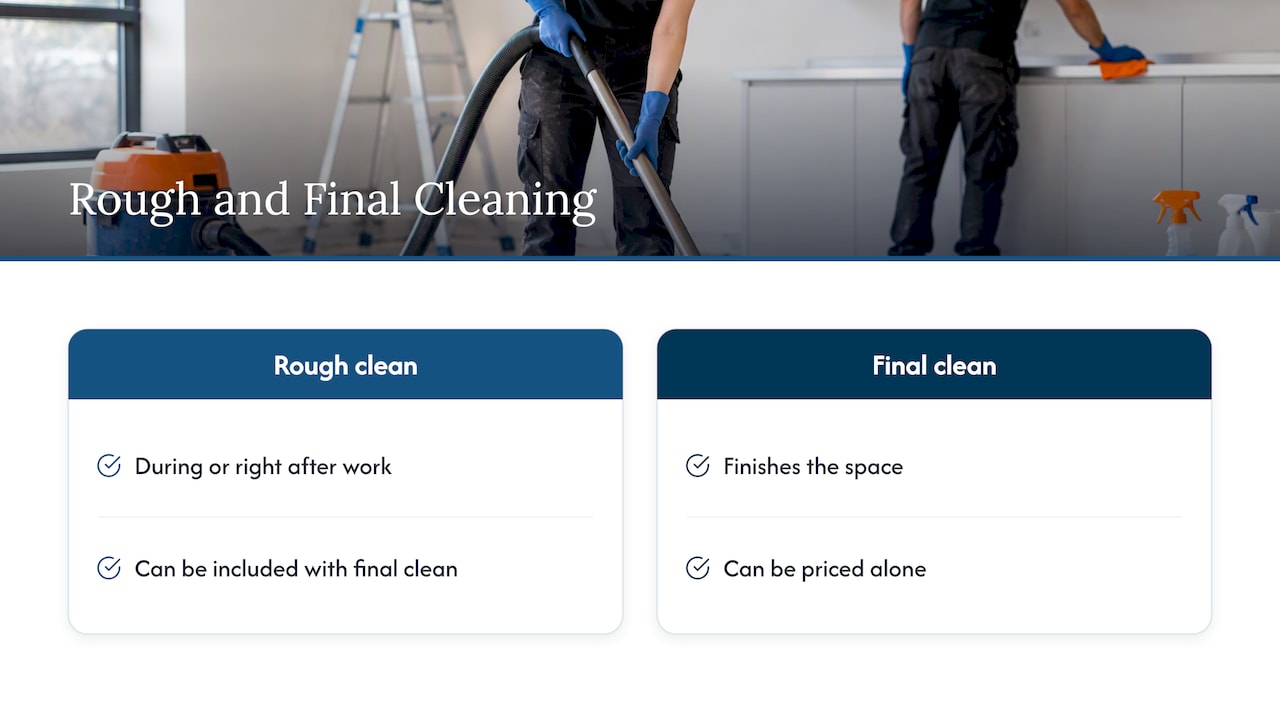
Most projects run in phases. HomeStars describes the usual split as a rough clean, done during or right after the work, and a final clean that finishes the space. Knowing the difference matters when you compare quotes, because one company may price only the final clean while another includes both.
If you want a full list of what is typically covered, our page on what post-construction cleaning includes breaks it down by area, and the post-construction cleaning checklist is useful to attach to your request for quotes.
Step 1: Define the scope before you call anyone
Companies can only quote accurately against a clear brief. Before you ask for prices, write down:
- Type of space. Office fit-up, retail unit, restaurant, warehouse, medical clinic or a multi-storey building each need different methods.
- Square footage and floors. Include access details such as elevator booking, loading docks and parking.
- Surfaces. Polished concrete, gypcrete floors, carpet, vinyl, glass, stainless steel and high ceilings all call for different tools.
- Timeline. Your handover date, inspection dates and any tenant move-in deadlines.
- Special zones. Ceiling grids, ductwork, light fixtures and high ledges that collect dust.
- Hours. Whether the crew can work evenings or weekends so other trades are not disrupted.
Gypcrete is a good example of why surfaces matter. Gypsum-based floor toppings leave a fine residue that needs the right process, and a general cleaner without experience can damage the surface or leave a film. We cover gypcrete cleaning for Winnipeg projects as part of our post-construction work.
Step 2: Verify WCB Manitoba clearance
This is the check most Winnipeg buyers skip, and it is the one with real financial consequences.
The Workers Compensation Board of Manitoba explains on its clearances page that if you hire a contractor who is not in good standing, you become responsible for including the labour portion of their earnings in your assessable payroll, and for reporting any workplace injuries that happen while they work for you. The WCB’s fact sheet on coverage for contract workers sets out how coverage applies to people working on a contract basis.
What to do:
- Ask the company for its WCB account number and a clearance letter before work starts.
- Confirm the status yourself through the WCB’s online Clearance Request System, which lets you search contractors and request clearance documents.
- Check again before you release final payment, because status can change during a contract.
A legitimate company will hand this over quickly. Hesitation is your answer. If you are unsure how the rules apply to your situation, contact WCB Manitoba directly or ask your accountant.
Step 3: Check insurance, and be named on it
WCB covers injuries to workers. Liability insurance covers damage to your property and injuries to third parties. Ask for:
- A certificate of commercial general liability insurance, current and not expired.
- Your business named as an additional insured for the duration of the project.
- The name of the insurer, so your broker can verify it.
Many commercial contracts ask for at least $2,000,000 in general liability coverage, but the right limit depends on your lease, your building owner’s requirements and your own policy. Your insurance broker or the landlord’s property manager can tell you what applies. If you are a tenant, check your lease first: some buildings require specific wording on certificates before any contractor can enter.
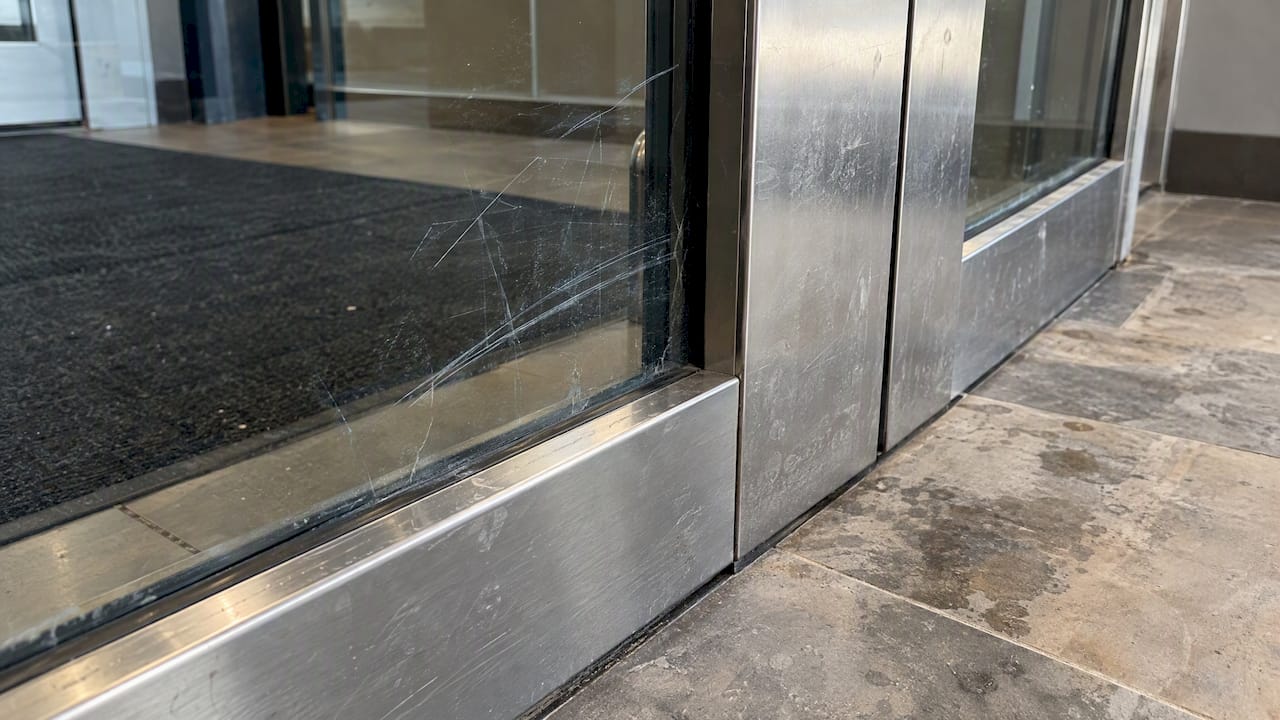
Also ask what happens if something is damaged. Scratched glazing, etched stainless steel and stained flooring are the common claims on post-construction jobs. A company that has a clear process for reporting and resolving damage is a company that has dealt with it before.
Step 4: Ask how they control dust
Construction dust is not just a nuisance. Concrete, tile and drywall products can contain crystalline silica, and the Canadian Centre for Occupational Health and Safety (CCOHS) says in its silicosis fact sheet that there is no effective treatment for silicosis, so the only way to protect workers is to control exposure to silica-containing dust.
That is why method matters. Ask the company to describe, in plain terms:
- HEPA-filtered vacuums for dry dust, rather than standard shop vacuums that push fine particles back into the air.
- Wet cleaning and damp wiping where appropriate, so dust is captured rather than lifted.
- No dry sweeping. Brooms and dry dusting throw fine particles into the air and onto surfaces you have just had finished.
- No compressed air. CCOHS notes in its guidance on cleaning with compressed air that people still use it out of old habit despite the hazards. A crew that offers to blow dust out of corners is telling you something about its training.
- Top-down sequence. High surfaces, ceiling grids and fixtures first, then walls, then floors, so dust does not settle on finished work.
High dusting deserves a line item of its own. Dust on ledges, beams, ductwork exteriors and light fixtures shows up weeks after handover if it was missed. Ask whether high dusting is included, and what equipment reaches it.
For a deeper look at why this problem drags on, see our notes on rework on Winnipeg commercial projects.
Step 5: Read the quote line by line
Post-construction cleaning is usually priced per job, based on square footage, level of mess, number of floors, finishes and timeline. Two quotes that look far apart often describe different work. Compare them against this table.
| What to check | Why it matters | Red flag |
|---|---|---|
| Phases included | Rough clean, final clean and touch-up are different visits | A single flat price with no phases listed |
| Surfaces and areas | Glass, floors, fixtures, ducts, high areas | “Whole building” with nothing itemized |
| Equipment | HEPA vacuums, scrubbers, wet methods | No mention of dust control |
| Debris removal | Who hauls construction waste and packaging | Assumed but not stated |
| Rework terms | What happens if you find missed areas | No walk-through or re-clean clause |
| Crew size and schedule | Whether the handover date is realistic | Vague dates, no crew count |
| Insurance and WCB | Proof before start | “We can send it later” |
| Exclusions | Items billed as extras | A long list of surprise add-ons |
Be wary of the lowest bid by a wide margin. A quote that ignores a phase, leaves out high dusting or assumes a one-person crew will usually return as change orders, or as a re-clean you pay for twice. Our article on commercial cleaning cost versus value explains how to weigh price against what is delivered.
A site visit is worth insisting on. A company that quotes a large commercial space from a phone call and a square footage figure is guessing.
Step 6: Ask about experience with your type of space
A tenant fit-up above a downtown office floor is not the same job as a new retail unit or a restaurant build-out. Ask:
- How many commercial post-construction projects have you completed in Winnipeg?
- Can you give two current commercial references, ideally similar in size and type?
- Who supervises the crew on site, and who do I call if something is missed?
- Do you coordinate with general contractors and trades on timing?
For restaurants and food-service builds, ask whether the company also handles commercial kitchen cleaning and kitchen exhaust cleaning, since those areas have their own requirements. The NFPA’s technical committee discussions on its kitchen ventilation standard have stressed the need for documentation of cleaning and inspection, so ask any contractor who touches ductwork to give you written records of what was cleaned.
Also look at the people behind the company. Is it a locally run business with staff you can meet, or a booking service that assigns whoever is free? Continuity of crew leads to continuity of standards.
Step 7: Agree on handover and sign-off
The cleaning is only finished when you say it is. Build a handover process into the contract:
- Walk-through with the crew lead at the end of the final clean, with your checklist in hand.
- Written punch list of anything missed, with a time frame for correcting it.
- Re-clean at no extra charge for items that were within the agreed scope.
- Photos or a short completion report for your records, especially useful for landlords, lenders and warranty claims.
- Final payment after sign-off, once WCB status has been re-checked.
For managers handling a larger building, our room-by-room safety checklist for post-construction cleaning gives you a structure to inspect against.
Our perspective: what separates a good job from a rework
We have been cleaning commercial spaces in Winnipeg since 2012, and have completed more than 700 projects. The pattern we see most often is simple: the projects that go badly were hired on price and a phone call, and the projects that go well were hired on scope.
Three things we would tell any manager:
- Walk the site with the contractor before the quote. We build customized cleaning plans for each facility, because a gypcrete floor, a glass-heavy lobby and a tenant suite with finished carpets do not need the same approach.
- Treat the paperwork as part of the service. We are certified and insured, and you should expect any company you hire to show you proof without being chased.
- Plan for the dust, not just the dirt. Visible mess is the easy part. Fine dust on high surfaces and in hidden areas is what generates complaints two weeks after you open.
We are a privately owned company, not a franchise, so the people who quote your job are the same people who answer when you call afterward. About 85% of our clients come back to us after their first project, and we take that as the real measure of the work.
— Jack
Questions to ask on the phone
Use this short list when you are screening companies:
- Are you in good standing with WCB Manitoba, and can I have the clearance letter today?
- Will you name us as additional insured on your liability policy?
- What equipment will you use for dust, and do you use compressed air or dry sweeping at any point?
- Does your quote cover rough clean, final clean and high dusting?
- How do you handle items we find after the walk-through?
- Can you work evenings or weekends to fit around other trades?
- Can I speak with two recent commercial clients in Winnipeg?
The answers will separate prepared companies from improvisers within ten minutes.
Hiring Eshine for a Winnipeg project
If you have a build or renovation in Winnipeg that needs a handover-ready clean, we offer post-construction cleaning with customized plans, advanced equipment and ongoing quality control, along with gypcrete cleaning, high dusting and floor care for the same site. Our Winnipeg commercial post-construction page explains how we work, and you can start a conversation about your project with our team. We do not publish prices, because every site is different, so we quote after we understand your space and timeline.
Common mistakes to avoid
- Hiring after the trades have left. Rough cleaning during the project keeps dust from spreading, and a booked crew is easier to schedule than an emergency one.
- Assuming a janitorial contractor can do it. Routine office cleaning and post-construction cleaning use different equipment and training.
- Accepting verbal assurances on insurance and WCB. Get documents.
- Skipping the walk-through because the opening date is close. That is when the walk-through matters most.
- Forgetting the long term. After the build is cleaned, set up regular service so the space stays at the standard you paid for.
FAQ
How early should I book a post-construction cleaning company in Winnipeg?
Contact companies as soon as your construction schedule is firm, ideally several weeks before substantial completion. Early booking lets the company visit the site, plan the rough clean and hold crew time for your handover date. Last-minute requests are often possible, but you have less room to compare quotes.
Should I ask for a WCB clearance letter even for a one-day job?
Yes. The WCB Manitoba clearances page ties your responsibility to whether the contractor is in good standing, not to how long the job lasts. Requesting the letter takes little time and protects you from reporting and payroll consequences.
What is the difference between a rough clean and a final clean?
A rough clean removes debris and the heavy layer of dust during or just after construction, so other trades can finish. A final clean is the detailed, handover-ready pass over surfaces, glass, floors and fixtures. Ask any company whether your quote includes both.
Is the cheapest quote ever the right choice?
Only if it matches the others line by line on scope, equipment, insurance and rework terms. A price far below the rest usually means a phase, high dusting or debris removal has been left out, and you pay for it later.
Sources
- WCB Manitoba: Clearances
- WCB Manitoba: Coverage for Contract Workers Fact Sheet
- CCOHS: Silicosis
- CCOHS: Cleaning with Compressed Air
- HomeStars: Post-Construction Clean-Up Cost guide