Post construction cleaning for Calgary mixed-use developments
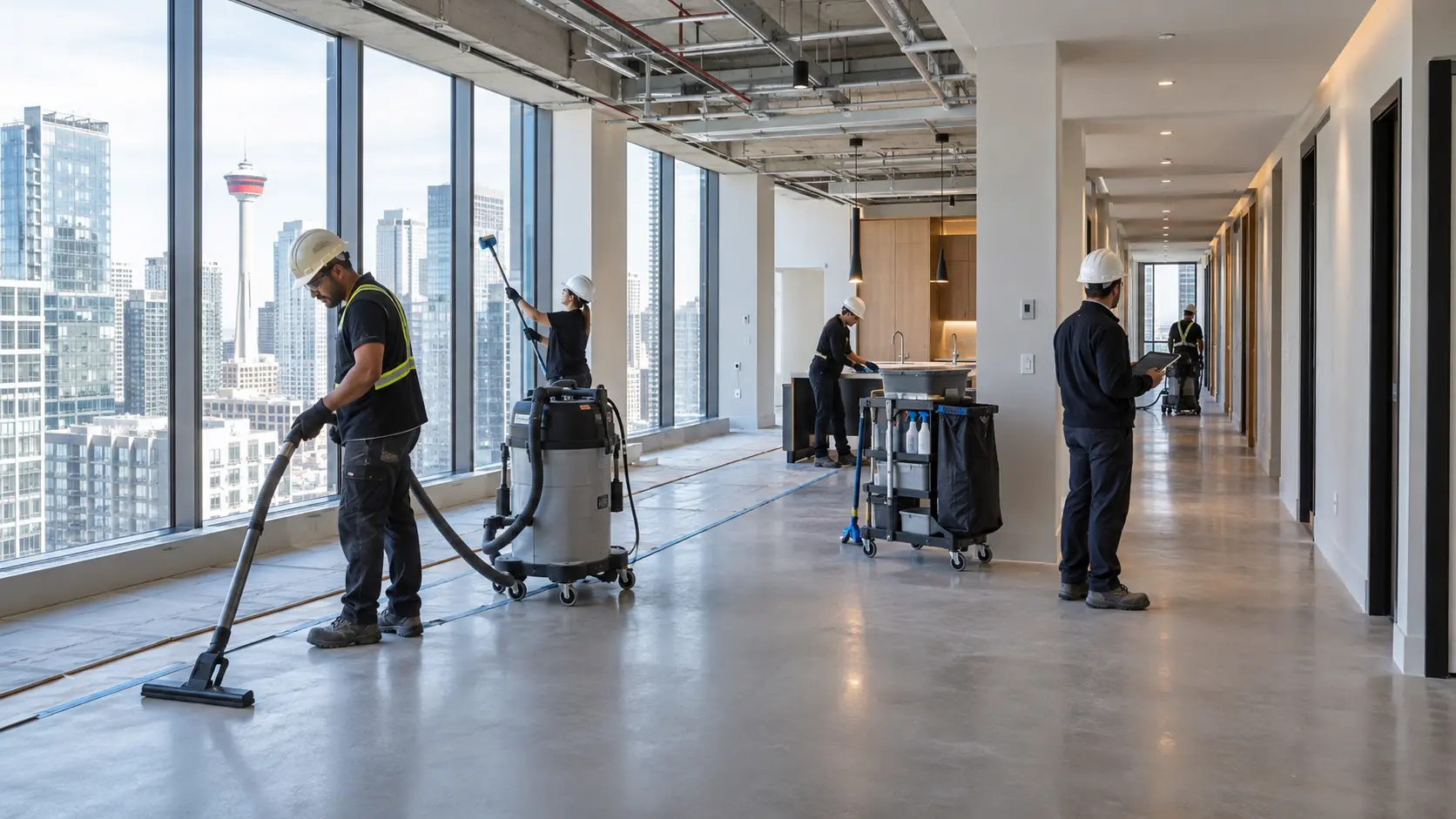
Post construction cleaning for Calgary mixed-use developments requires coordination across retail, office, multi-unit, lobby, and shared building areas that may not reach completion at the same time. These projects need more than a single final clean because each zone has different surfaces, access requirements, finish standards, and handover expectations. Eshine Cleaning Services supports Calgary developers and general contractors by planning post construction cleaning around phased turnover, trade activity, and site-specific completion schedules.
What makes mixed-use construction cleaning complex
Mixed-use construction cleaning is complex because one building can contain several occupancy types with different cleaning priorities. A retail podium may need glass, floors, entrances, and display-facing surfaces prepared for tenant access, while office or multi-unit areas may require detailed dust removal, fixture cleaning, and common area preparation before walkthroughs.
The main risk is treating the entire development as one uniform space. That approach can lead to missed zone-specific requirements, re-contamination in completed areas, or cleaning work being scheduled before final trades have finished in that section.
Different surface types and finish standards per zone
Retail, office, multi-unit, and shared building areas often use different materials and finishes. Storefront glass, polished concrete, tile, carpet, stainless steel, millwork, elevator finishes, balcony doors, and suite fixtures all require different cleaning methods.
Finish standards also vary by use. In practice, this means each zone may have different inspection expectations, visibility requirements, and readiness criteria before handover. Retail and lobby areas are usually more visibility-sensitive because marks, adhesive residue, and dust are easier to notice during public or tenant-facing walkthroughs. Multi-unit areas need detailed cleaning around fixtures, cabinets, closets, ledges, and interior glazing. Office areas often focus on floors, partitions, washrooms, shared corridors, and surfaces that must be ready for tenant improvements or occupancy.
Coordinating multiple handover dates
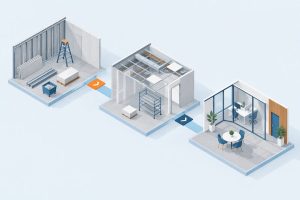
Mixed-use developments rarely turn over all areas on the same date. A retail shell, lobby, parkade connection, amenity space, office level, or multi-unit floor may each have separate handover milestones.
Cleaning should be scheduled around those milestones instead of waiting for the entire building to finish. This helps completed zones stay on track for inspections, tenant turnover, occupancy preparation, and project milestones. It also allows deficiencies, access issues, and re-clean needs to be documented by zone before final sign-off.
If a handover date changes after cleaning has been completed, additional cleaning may be required before turnover. Dust accumulation, continued trade access, and construction traffic can affect the condition of a completed zone during extended delays.
Cleaning requirements by zone in a mixed-use build
Cleaning requirements should be defined by zone because each area has different surfaces, inspection expectations, turnover timing, and readiness standards. Retail, office, multi-unit, and shared areas are often reviewed by different stakeholders, which means the cleaning scope and turnover expectations can vary significantly between zones.
| Zone | Key surfaces | Finish standard | Handover timing considerations |
|---|---|---|---|
| Retail podium | Storefront glass, doors, thresholds, hard floors, display-facing surfaces | Clean, residue-free, tenant-facing surfaces ready for access or merchandising | Often completed before upper floors or shared areas are fully inactive |
| Commercial office areas | Floors, partitions, washrooms, interior glazing, fixtures, shared corridors | Dust-controlled and ready for tenant access, inspection, or further tenant improvement work | May require staged cleaning by floor or tenant area |
| Multi-unit areas within the development | Suite floors, cabinets, counters, fixtures, windows, doors, closets, balconies where applicable | Detailed cleaning suitable for walkthroughs, deficiency review, or occupancy preparation | Usually phased by floor, stack, or possession schedule |
| Main lobby and shared entrances | Glass, flooring, elevator doors, millwork, signage areas, vestibules | High-visibility finish with attention to dust, fingerprints, adhesive, and traffic marks | Often exposed to ongoing construction traffic and may need final re-clean |
| Amenity and common areas | Floors, counters, mirrors, washrooms, railings, interior glass, built-in features | Ready for inspection, resident use, or staged opening | Timing depends on furniture, fixtures, equipment, and final trade completion |
| Parkade and service connections | Doors, elevator lobbies, stairwells, vestibules, transition areas | Safe, accessible, and free of construction debris and tracked dust | Can re-soil quickly if active trades continue moving through the area |
Shared transition areas such as vestibules, connecting corridors, elevator lobbies, and access routes often require special attention when adjacent zones are at different construction stages. These spaces are commonly cleaned and re-cleaned multiple times because they remain active connections between completed and active work areas.
Managing construction traffic across active and completed zones
Completed zones need protection once cleaning is finished. Without traffic control, dust, adhesive transfer, debris, and floor marks can return before inspection or tenant access.
Effective controls include:
- Isolate completed zones from active construction traffic
- Use temporary barriers during phased handover
- Schedule re-clean after final trades complete in each zone
- Document each zone before sign-off
Temporary barriers help limit dust migration, foot traffic, equipment movement, and material transport through completed areas. These controls reduce the likelihood of contamination returning after cleaning has been completed.
When construction traffic through a completed zone cannot be avoided, additional floor protection, access controls, and scheduled re-cleaning are often required before inspection or turnover.
Documenting each zone before sign-off creates a record of site conditions at the time cleaning was completed. This documentation can support quality control reviews, deficiency tracking, and accountability when contamination occurs after turnover preparation.
Retail podium and lobby cleaning
Retail podiums and lobbies often require separate cleaning attention because they function as shared access points for tenants, visitors, residents, inspectors, and construction personnel. Even after cleaning is completed, these areas frequently remain exposed to building activity that can affect final presentation standards.
Cleaning in these spaces should account for construction dust, adhesive residue, floor protection marks, fingerprints, glazing haze, and debris left around entrances or thresholds. Timing matters because these areas often remain active pathways even after the initial clean is complete.
 Storefront glass and display surface preparation
Storefront glass and display-facing surfaces need careful cleaning because residue, labels, dust, and streaks are highly visible under interior lighting and daylight. Cleaning should include glass, frames, door hardware, ledges, and nearby surfaces that affect the finished appearance.
The key constraint is access. If trades are still installing signage, doors, millwork, or tenant-facing fixtures, final glass cleaning should be scheduled after that work is complete to reduce repeat cleaning. Tenant-installed displays, merchandise, and operational fixtures are typically handled separately from base building post construction cleaning unless included within the project scope.
Hard floor and threshold cleaning
Hard floors and thresholds collect construction dust, compound, adhesive transfer, paint specks, and marks from equipment or foot traffic. Cleaning should match the flooring material because polished concrete, tile, vinyl, stone, and sealed surfaces do not respond the same way to cleaning equipment, chemicals, or residue removal methods.
Thresholds need attention because they sit between active zones and completed zones. If they are not cleaned and protected, they can keep transferring dust and debris into areas that are already finished.
Working with Calgary developers on multi-phase cleaning schedules
Multi-phase cleaning schedules help Calgary developers align cleaning with construction progress, inspection dates, tenant access, and possession timelines. The schedule should identify which zones are ready, which zones remain active, and which areas may need re-cleaning before final handover.
Many mixed-use projects require multiple cleaning stages. Initial cleaning may occur after major construction activity, deficiency cleaning may follow inspections and corrections, and final turnover cleaning prepares the space for occupancy or tenant access.
For mixed-use developments, Eshine Cleaning Services plans cleaning around project milestones instead of assuming one final clean can resolve every area at once. This gives GCs and project managers more control over access, sequencing, and quality review.
Communication with GCs and project managers
Clear communication with GCs and project managers prevents cleaning from happening too early or being missed in areas that are ready for turnover. The cleaning scope should confirm zones, access times, surface priorities, site restrictions, and the expected condition at sign-off.
Sign-off expectations may include cleanliness standards, deficiency readiness, inspection preparation, or occupancy requirements depending on the project stage and stakeholder involved.
It is also important to clarify responsibility for re-contamination. If a cleaned zone is reopened to trades, the re-clean should be scheduled and tracked separately from the original handover clean.
Flexible scheduling across project milestones
Flexible scheduling is important when mixed-use areas reach completion at different times. Retail podiums, lobbies, office areas, amenity spaces, and shared building components may each need separate cleaning windows.
Schedule adjustments are often required when one zone progresses faster or slower than expected. Cleaning resources can then be reassigned to completed areas while active zones continue toward their next milestone.
A staged schedule allows cleaning crews to focus on the areas that are actually ready. It also reduces disruption by keeping work aligned with inspections, tenant walkthroughs, and final trade completion.
Why mixed-use developers in Calgary choose Eshine
Mixed-use developers in Calgary choose Eshine Cleaning Services when they need post construction cleaning coordinated across different building uses, phased handovers, and active site conditions. The work requires clear sequencing, zone-specific cleaning standards, contamination control measures, and communication with the project team before each turnover point.
Eshine Cleaning Services supports developers and GCs by cleaning retail podiums, lobbies, commercial areas, common areas, and other project zones according to the requirements of each phase. This approach helps reduce re-cleaning delays, inspection delays, and turnover disruptions that can occur when completed zones are affected by ongoing construction activity.
By aligning cleaning schedules with project milestones and turnover requirements, Eshine Cleaning Services helps mixed-use developments move through phased completion with greater consistency across all building zones.