Post Construction Office Fit-Out Cleaning in Calgary: Tenant Improvement Projects
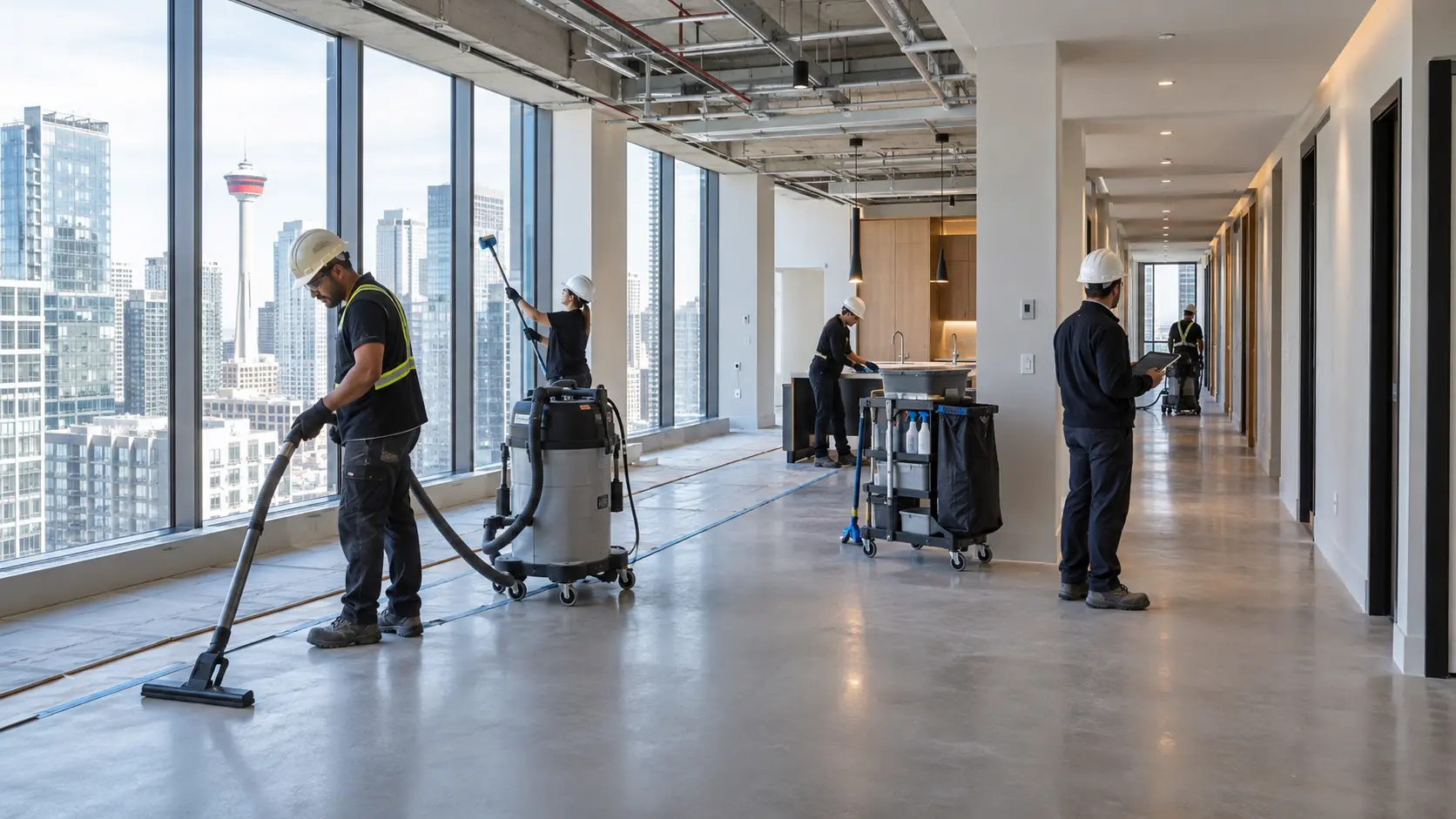
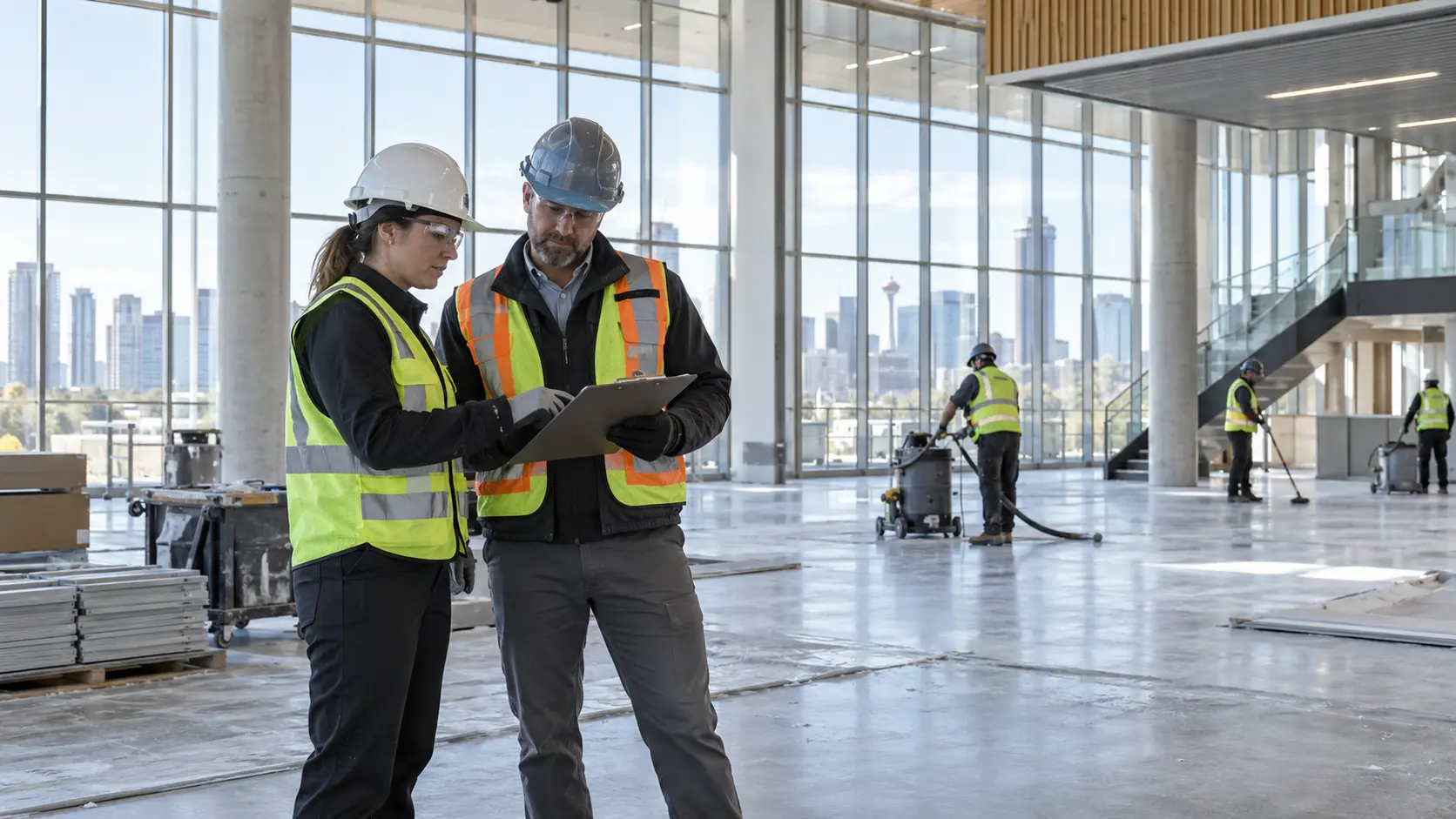
Post construction office fit-out cleaning in Calgary focuses on preparing newly renovated commercial spaces for tenant occupancy. Unlike full building construction projects, tenant improvements are usually confined to individual office suites, floors, or leased spaces within an existing building. Even though the construction footprint is smaller, the cleaning requirements remain detailed because drywall dust, adhesives, millwork residue, and fine construction debris can affect the readiness of the space. Eshine Cleaning Services provides post construction cleaning for Calgary tenant improvement projects to help property managers, contractors, and commercial landlords prepare spaces for handover and occupancy.
What Tenant Improvement Cleaning Involves
Tenant improvement cleaning focuses on removing construction-related contamination from a completed office fit-out before the space is occupied. The objective is to present a clean, functional environment that meets landlord requirements and tenant expectations.
Unlike ongoing office cleaning, tenant improvement cleaning addresses the residue left behind by construction trades, finishing contractors, and installation crews. This often includes fine dust, protective film residue, adhesive transfer, paint overspray, caulking remnants, packaging debris, and construction-related surface contamination.
Scope of a Typical Office Fit-Out
A Calgary office fit-out can involve a wide range of interior improvements depending on the tenant’s requirements. Common work may include new drywall partitions, suspended ceilings, flooring installation, millwork, cabinetry, glass offices, boardrooms, electrical upgrades, lighting installation, HVAC modifications, and workstation construction.
The amount of cleaning required is influenced less by the square footage of the office and more by the type of work completed and the number of trades involved during construction.
What Gets Left Behind After TI Construction
Construction crews remove major debris during the project, but substantial cleaning requirements often remain after completion.
Drywall sanding creates fine airborne dust that settles throughout the suite. Millwork installation can leave sawdust and surface residue. Flooring adhesives may remain near transition areas. Protective films often leave adhesive transfer on glass and metal surfaces. Ceiling work can create dust accumulation around vents, diffusers, ceiling grids, and lighting fixtures.
These materials may not be immediately visible from floor level but can become apparent once natural light enters the space or furniture installation begins.
Key Cleaning Areas in a Calgary Office Fit-Out
Certain surfaces consistently require additional attention during tenant improvement cleaning because they collect the highest concentration of construction residue.
Drywall dust on all horizontal surfaces
Fine drywall dust settles on desks, window ledges, millwork, shelving, electrical fixtures, door frames, baseboards, and other horizontal surfaces throughout the office. If not removed completely, dust can continue circulating through the space after occupancy.
Millwork and cabinetry residue
Custom millwork, reception desks, storage cabinets, shelving systems, and built-in furniture often retain sawdust, fingerprints, protective coatings, labels, and adhesive residue following installation.
HVAC vents and ceiling tiles
Air diffusers, return vents, ceiling grids, and ceiling tiles commonly collect construction dust during the fit-out process. These areas can continue releasing dust into occupied spaces if they are not properly cleaned before occupancy.
Glass partitions and hardware
Glass offices, meeting rooms, entry systems, and interior partitions often contain fingerprints, adhesive transfer, labeling residue, paint specks, and construction dust that affect visibility and appearance.
Hard flooring and transition strips
Hard surface flooring frequently requires detailed cleaning around corners, edges, transition strips, and perimeter areas where dust, debris, and adhesive residue accumulate during construction.
Comparing Fit-Out Cleaning to Full Building Post-Construction
 Tenant improvement projects and full building construction projects create different cleaning requirements, timelines, and operational considerations.
| Factor | Fit-Out Clean | Full Building Post-Construction Clean |
|---|---|---|
| Project Scope | Individual suites or office areas | Entire building or facility |
| Building Occupancy | Often occupied during work | Typically unoccupied |
| Cleaning Area | Localized project footprint | Multiple building systems and areas |
| Coordination Requirements | High coordination with tenants and property managers | High coordination with general contractors |
| Scheduling Flexibility | Usually limited by lease dates | Usually tied to project completion |
| Primary Objective | Occupancy readiness | Building turnover and commissioning |
Because tenant improvements often occur within active office towers and commercial properties, cleaning crews must frequently coordinate around building access requirements, elevators, security procedures, and neighboring occupants.
Preparing the Space for Tenant Occupancy
Occupancy readiness requires more than removing visible debris. The goal is to deliver a professional environment that allows the tenant to move into the space without encountering construction-related contamination.
Meeting Landlord and Tenant Expectations
Landlords want a space that supports successful tenant turnover. Tenants expect a finished office environment that reflects the quality of the completed project.
A thorough fit-out clean helps reduce deficiencies during walkthroughs, minimizes complaints after occupancy, and supports a smoother transition between project completion and operational use.
Cleaning Before Furniture and Technology Install
Cleaning is typically most effective after construction activities are complete but before furniture installation, workstation setup, and technology deployment begin.
This sequence allows surfaces to be fully accessed and cleaned before desks, meeting room furniture, telecommunications equipment, and other assets occupy the space. It also reduces the risk of dust contamination affecting newly installed equipment and furnishings.
Scheduling Fit-Out Cleaning Around the Lease Commencement Date
Tenant improvement projects are often governed by fixed occupancy deadlines. Delays can affect move-in schedules, contractor closeout activities, and lease commencement obligations.
Working to Hard Deadlines
Many Calgary office fit-outs operate on strict turnover schedules. Cleaning often occurs immediately after final construction activities and shortly before tenant occupancy.
The cleaning schedule must account for final trade visits, deficiency corrections, inspections, and access requirements while still providing enough time to complete detailed cleaning before handover.
Coordinating with Property Managers and Contractors
Successful fit-out cleaning requires coordination between property managers, contractors, site supervisors, and building management teams.
Access schedules, elevator reservations, security procedures, parking restrictions, and final walkthrough requirements can all influence when cleaning crews perform the work. Early coordination helps avoid scheduling conflicts that can affect occupancy timelines.
Why Calgary Property Managers Use Eshine for Fit-Out Cleans
Tenant improvement cleaning requires an understanding of commercial construction environments, turnover schedules, and occupancy requirements. Property managers need cleaning teams that can work within active commercial buildings while meeting the expectations of landlords, contractors, and incoming tenants.
Eshine Cleaning Services provides post construction cleaning for Calgary office fit-outs, tenant improvements, and commercial renovation projects. Our team works with property managers, general contractors, project managers, and building owners to prepare office spaces for occupancy while supporting lease commencement schedules and project closeout requirements.