Canadian Facility Managers: 5 Safety Checks for Construction Cleaners
Hire a professional post-construction cleaning team before you hand a new or renovated space over to tenants or staff. A qualified crew handles debris removal, HEPA vacuuming, surface and finish-safe cleaning, and HVAC handover checks so the space is genuinely occupancy-ready. Ask any contractor for a scoped quote or checklist before work starts, not a flat hourly estimate.
TL;DR:
- Confirm that all dust removal uses HEPA-filter vacuums and that contractors follow documented silica-control procedures; dry sweeping and compressed air are unacceptable.
- Ensure the scope clearly states which tasks are included in each phase, especially specialized services like high dusting, gypcrete cleaning, or exhaust degreasing, to avoid unexpected charges.
- Schedule rough, final, and touch-up cleans at appropriate times to prevent recontamination, with the final clean after all trades are done and touch-up just before occupancy.
- Expect HVAC system inspections, filter changes, and documented debris removal at handover, and verify these steps are included in the contractor’s scope.
- Be wary of bids lacking safety documentation, insurance proof, or clear scope details; request standardized scope templates to compare bids accurately.
Table of Contents
- What does post-construction cleaning actually include?
- When should you schedule rough, final and touch-up cleans?
- What safety and air quality requirements should you confirm before hiring?
- How do you vet bidders and spot red flags before signing?
- What drives the cost and how long does the job take?
- What happens on cleaning day and what should you get at handover?
- Eshine Cleaning Services: what our record actually shows
- A note on the mistakes that cost the most at handover
- Get a scoped post-construction quote
- FAQ
- Sources
What does post-construction cleaning actually include?
A proper post-construction clean is not a light dusting pass. From there, crews move into detail work on windows, light fixtures, cabinetry and high-touch surfaces that trades leave coated in film and fingerprints.

The core cleaning method matters as much as the task list. Finishes like polished concrete, hardwood and new paint can be damaged by abrasive pads or the wrong chemicals, so finish-safe methods and HEPA vacuuming rather than dry sweeping are standard for airborne dust control.
A few tasks get billed separately because they need specialized equipment:
- High dusting for ceilings, ductwork and overhead fixtures
- Gypcrete floor cleaning ahead of flooring installation
- Kitchen exhaust degreasing in food-service builds
- Carpet extraction for any installed broadloom or tile
Ask any bidder explicitly which of these are included and which are add-ons, since vague scopes are where quotes diverge the most.
When should you schedule rough, final and touch-up cleans?
Timing a post-construction clean wrong causes repeat work and delays. Most commercial projects move through three distinct phases:
- Rough clean: happens once major trades finish and before fine finishing work, clearing bulk debris and heavy dust so painters and flooring crews can work cleanly.
- Final clean: scheduled after all trades are done and inspections are substantially complete, covering every surface, fixture and window to a move-in standard.
- Touch-up clean: booked 24 to 72 hours before occupancy to catch dust that resettles after the final clean and any marks left by furniture or signage installers.
Coordinating these phases with your general contractor and inspection schedule avoids paying for a final clean that gets undone by a trade working late. Skipping the touch-up is one of the most common reasons a space looks dusty on opening day despite an earlier thorough clean.
What safety and air quality requirements should you confirm before hiring?
Construction dust does not disappear once visible debris is gone, and how a crew removes it affects everyone who occupies the building afterward. Health Canada’s indoor air quality guidance recommends HEPA-filter vacuuming and low-VOC cleaning products, and advises against dry sweeping or compressed-air cleaning methods that just redistribute fine particles into the air.
HVAC systems recirculate construction dust throughout a building, so confirming filter changes and system inspection before handover is a documented step, per Health Canada, not an optional extra.
Before signing a contract, confirm the crew will:
- Use HEPA-filter vacuums on all dust-generating tasks
- Avoid dry sweeping and compressed-air blowing for debris control
- Follow documented silica-control procedures on any concrete, drywall or masonry dust
- Stop work and isolate the area immediately if suspected asbestos-containing material turns up, per CCOHS guidance on asbestos control
- Inspect and document HVAC filter changes as part of the handover package
Any contractor who cannot speak to these points without hesitation is a scope risk, not just a safety one.
How do you vet bidders and spot red flags before signing?
Treat every post-construction cleaning quote like a procurement decision, not a casual estimate. Start by confirming scope alignment: ask exactly which phases (rough, final, touch-up) and which specialty tasks are included in the base price, and get exclusions in writing.
Next, probe safety and equipment practices directly:
- Do crews use HEPA vacuums as standard equipment, not an upcharge?
- What is the documented PPE and silica-handling protocol for dusty tasks?
- Can they provide proof of insurance and workers’ compensation coverage?
- Will they provide references from similarly sized commercial projects?
A provider with a real track record will share a repeat-client rate or project count without prompting. Vague answers on any of these points, missing insurance documentation, no written safety plan, or a price that looks too low with no stated exclusions are all signs to keep looking. A detailed post-construction checklist is a useful tool to compare against whatever scope a bidder sends you, and reviewing how to choose the right post-construction team before you call anyone saves time on the back end.
Pro Tip: Ask every bidder for the same written scope template so you are comparing identical line items, not apples to oranges.
What drives the cost and how long does the job take?
There is no fixed national rate for post-construction cleaning because the variables are too wide. The biggest cost drivers are:
- Total square footage and number of floors or rooms
- Finish level (polished concrete and glass partitions take longer than painted drywall)
- Volume of construction debris left on-site
- Specialty services like gypcrete cleaning, high dusting or kitchen exhaust work
- Disposal logistics and site access, including loading docks and elevator availability
As a general illustration, a small office suite might be a one-day job for a small crew, while a multi-floor retail build-out or restaurant space can run several days across the rough, final and touch-up phases. Ask for a task-by-task price breakdown rather than a single hourly rate, so you can see exactly what you are paying for at each phase and compare bids on equal footing.
What happens on cleaning day and what should you get at handover?
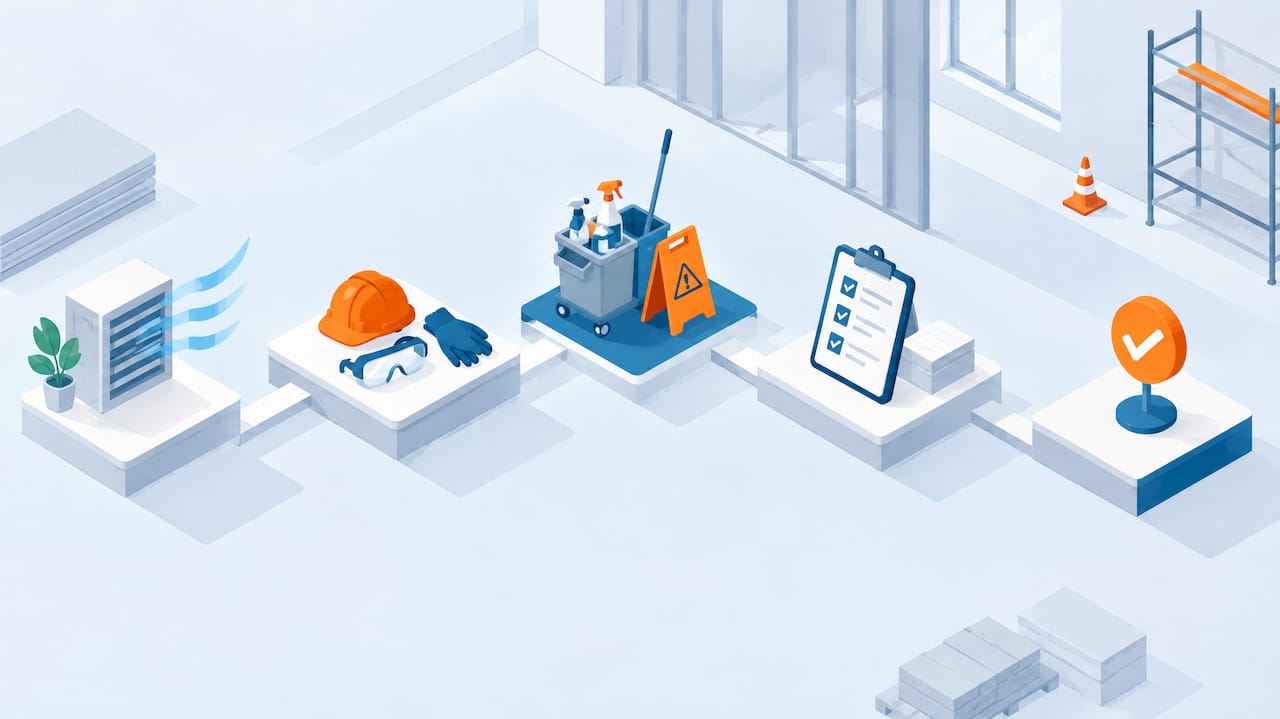
A well-run service day follows a predictable sequence:
- Crew arrives and does a site walk with your on-site contact to confirm scope and access points.
- Containment is set up around any dust-generating work still in progress nearby.
- Bulk debris removal happens first, followed by HEPA vacuuming of all surfaces.
- Detail cleaning covers fixtures, glass, cabinetry and touchpoints.
- A final walk-through confirms the space against the agreed checklist.
At handover, request a signed completion checklist, before-and-after photos, HVAC filter-change documentation, and waste disposal records. Public Health Ontario’s commissioning guidance recommends exactly this kind of objective evidence before accepting a space as ready. If punch-list items surface late, schedule a planned touch-up rather than asking the crew to improvise fixes on the spot.
Eshine Cleaning Services: what our record actually shows
We have operated since 2012, building customized commercial cleaning plans for businesses across Winnipeg and Calgary for over a decade. Our crews use advanced equipment to keep results consistent across projects. We report a repeat-client rate after completing multiple projects, a figure we track as a measure of client satisfaction over time. Our post-construction cleaning checklist and guidance on choosing the right cleaning team outline the scope we deliver on every job.
A note on the mistakes that cost the most at handover
The costliest mistake we see is skipping the touch-up clean to save a day, then dealing with a dusty opening day and a frustrated tenant. The second is letting cleaning crews use whatever chemicals are on the truck without checking finish compatibility, which can void manufacturer warranties on new flooring or cabinetry. Build both checks into your contract from the start.
— Jack
Get a scoped post-construction quote
We build tailored cleaning plans for new and renovated commercial spaces, backed by certified, insured crews and the same equipment standards across every job.
Whether your project is in Calgary or Winnipeg, request a site visit through our main services page so we can quote against your actual scope rather than a generic rate. If your build is in Calgary, our Calgary post-construction page outlines what we cover locally; for Winnipeg projects, see our Winnipeg-specific page. Before you sign, confirm the written quote includes HVAC handover documentation and a clear phase-by-phase scope, not just a square-footage number.

FAQ
What is post-construction cleaning?
Post-construction cleaning is the specialized cleaning that prepares a newly built or renovated space for occupancy, covering debris removal, dust control, and detail cleaning of surfaces, fixtures and finishes. It typically runs across rough, final and touch-up phases rather than a single visit.
How much is a 1-hour clean?
Post-construction cleaning is priced by project scope, not by the hour, because the work varies widely by square footage, finish level and debris volume. Ask any provider for a task-by-task breakdown rather than an hourly rate so you can compare quotes accurately.
What is the 5-5-5 rule for cleaning?
There is no standard, universally recognized “5-5-5 rule” in commercial or post-construction cleaning guidance. Definitions circulating online vary, so it is best treated as informal advice rather than an industry standard.
Sources
Before contracting any provider, review the primary guidance behind these obligations: Health Canada’s office building IAQ guidance, CCOHS guidance on asbestos control, and Public Health Ontario’s commissioning checklist. Coordinating cleaning with finishing trades, including painters following dust control practices, also helps reduce repeat cleaning.
- Guidance on improving indoor air quality in office buildings – Health Canada
- Asbestos control — CCOHS
- CRMD checklist: Commissioning – Public Health Ontario
Recommended
- Post-Construction Cleaning Checklist
- Post-Construction Cleaning Tips for Winnipeg Properties
- What Does Post-Construction Cleaning Include?
- Why Your Commercial Cleaning Contractor Should Be Pre-Qualified and Insured
Learn more about Eshine’s post construction cleaning in Winnipeg.