IAQ Aware Commercial Cleaning Stewardship for Canadian Facilities
For most commercial buildings, the most reliable way to keep spaces clean, safe and productive is a tailored contractor-managed cleaning programme. The right programme pairs documented scopes of work with WHMIS-trained staff, appropriate products and coordination with your building’s indoor air quality plan. If you manage a facility right now, your immediate next step is simple: request a site visit and a written specification from a qualified contractor before you sign anything.
TL;DR:
- A tailored cleaning program should include routine, periodic, and specialized tasks, clearly documented in scope to ensure accurate proposal comparisons.
- Cleaning contributes to indoor air quality but must be coordinated with ventilation and moisture control to be truly effective.
- Choosing a contractor involves verifying insurance, WHMIS training, scope clarity, and proof of quality control measures, not just cost.
- Scheduling and pricing depend on building use, foot traffic, and specific service requirements, with transparent proposals listing all variables separately.
- Building a customized plan requires mapping high-touch areas, specifying products and frequencies, and coordinating with HVAC to maintain a safe indoor environment.
Table of Contents
- What commercial building cleaning includes: routine tasks and specialized work
- Why commercial cleaning matters for productivity and air quality
- Common commercial cleaning services to include in your scope
- How to choose a commercial cleaning company
- Scheduling, pricing and timelines for commercial cleaning
- Aligning cleaning with ventilation and building maintenance
- How to build a customized cleaning plan step by step
- Publisher perspective: cleaning as building stewardship, not a checklist
- Request a site visit for your commercial cleaning programme
- FAQ
- Sources
What commercial building cleaning includes: routine tasks and specialized work
A complete programme covers three layers. Daily work keeps a building functional: washroom sanitation, waste removal, vacuuming, dusting and surface wipe-downs in common areas and offices. Periodic maintenance protects the building’s finishes and air quality over time, including carpet extraction, floor stripping and waxing, high dusting above sightlines, and window cleaning on a set rotation.
Specialized work responds to events rather than a calendar: post-construction cleanup after renovations, kitchen exhaust cleaning tied to fire-code compliance, gypcrete floor care during new builds, and industrial cleaning for facilities with production equipment or heavier soil loads.
- Routine tasks: washrooms, waste, vacuuming, dusting and daily surface wipe-downs.
- Periodic maintenance: carpet extraction, floor stripping and waxing, high dusting and scheduled window work.
- Specialized services: post-construction turnover, kitchen exhaust cleaning, gypcrete care and industrial tasks.
A scope that names all three layers, rather than bundling everything into vague “daily cleaning,” gives you a clearer basis for comparing proposals.
Why commercial cleaning matters for productivity and air quality
Clean, well-maintained spaces shape how customers judge your business before a single interaction happens, and they affect how comfortable employees feel spending eight hours in a building. Cleaning also plays a direct role in indoor air quality strategy. Health Canada’s guidance on indoor air quality in office buildings identifies cleaning products, moisture, furnishings and occupant activity as contributors to IAQ problems, and recommends low-VOC products along with HEPA-filter vacuuming as part of a layered response.
Cleaning supports indoor air quality, but it does not replace ventilation. Health Canada’s guidance is explicit that cleaning practices work alongside mechanical ventilation and source control, not instead of them, which is why a cleaning scope should reference your building’s ventilation plan rather than operate in isolation.

Beyond air quality, consistent cleaning reduces wear on flooring, fixtures and furnishings, which lowers long-term replacement and refinishing costs and cuts down on the maintenance complaints that pile up when upkeep is inconsistent.
Common commercial cleaning services to include in your scope
Most facility managers draw from a similar menu of services, though the mix depends on building type and use. Office and janitorial programmes form the backbone, usually scheduled nightly or on a shift basis depending on occupancy. Post-construction and turnover cleaning follows a checklist that clears dust, debris and residue before a space reopens to tenants or customers.
Floor care, including stripping, waxing and commercial carpet cleaning, protects flooring investments and addresses allergens trapped in carpet fibre. Commercial kitchens need their own cleaning line, and kitchen exhaust cleaning in particular is tied directly to fire-safety compliance rather than appearance alone. High dusting addresses surfaces most daily cleaning crews miss, while drone window cleaning offers an alternative for exterior glass on taller structures where ground-based equipment or scaffolding is impractical.
- Office and janitorial programmes: flexible scheduling built around occupancy patterns.
- Post-construction and turnover cleaning: checklist-driven clearance before reopening.
- Floor care and carpet cleaning: protects finishes and reduces trapped allergens.
- Kitchen and exhaust cleaning: tied to fire-safety requirements, not just hygiene.
- High dusting and window services: address surfaces and heights standard crews skip.
How to choose a commercial cleaning company
Choosing a contractor is a procurement decision, not just a price comparison. Start by verifying insurance and pre-qualification documents, confirming WHMIS training for all staff, and asking how workers access Safety Data Sheets on-site.
- Confirm proof of insurance, WHMIS training records and SDS access for the crew assigned to your building.
- Request a written scope of work that specifies task frequency, named products, and equipment standards such as HEPA vacuums and a low-VOC product policy.
- Ask for quality-control evidence: digital checklists, inspection logs, audit frequency and client references you can call.
- Confirm the contractor can explain, in plain terms, when they clean versus when they disinfect, and why.
Pro Tip: Ask any bidder to walk you through one completed digital checklist from an existing client before you sign; a contractor with nothing to show is a red flag worth taking seriously.
Watch for vague scopes that list “daily cleaning” with no detail, no evidence of SDS access, and disinfecting claims that don’t reference a labelled, DIN-registered product. The distinction between cleaning and disinfecting matters enough that any contractor should be able to explain it without hesitation.
Scheduling, pricing and timelines for commercial cleaning
Scheduling depends heavily on occupancy. A 24-hour operation may need shift-based cleaning throughout the day, while a standard office runs well on nightly or periodic schedules timed around when the building empties out. Deciding how often to clean starts with mapping foot traffic and high-touch zones rather than defaulting to a fixed calendar.
Pricing is driven by square footage, frequency, labour requirements, specialized equipment and whether work happens during or after business hours. A proposal should break these out line by line rather than quoting a single bundled number.
- Scheduling: matched to occupancy, from nightly janitorial to shift-based coverage.
- Pricing drivers: area, frequency, labour, equipment and after-hours access.
- Timelines: carpet extraction needs drying time, post-construction clearance follows a checklist, and contaminant-generating work should allow a ventilation wait period before reoccupancy.
A transparent proposal names each of these variables separately, which makes it easier to compare bids and to adjust scope later without renegotiating the entire contract.
Aligning cleaning with ventilation and building maintenance
Cleaning works best as one piece of a coordinated health and safety approach, not a standalone task. Health Canada’s IAQ guidance frames cleaning as one contributor among several, alongside ventilation, moisture control and source management.
Cleaning and disinfecting serve different purposes: cleaning removes soil and some germs from surfaces, while disinfecting uses a labelled product to reduce germs further, and visible soil should be removed before disinfecting for the product to work as intended.
Adapted from CCOHS guidance on sanitation and infection control for cleaning staff
CCOHS guidance also sets expectations for worker safety: WHMIS training, SDS access and appropriate PPE are standard requirements for custodial staff handling cleaning chemicals, not optional extras. Practical coordination steps include choosing low-VOC products, using HEPA vacuums on carpeted areas, and scheduling dust- or fume-generating tasks for periods when fewer occupants are present. Poorly maintained HVAC systems can undercut even a well-run cleaning programme, which is one reason building managers track contamination risk in ventilation systems alongside their cleaning schedule.
How to build a customized cleaning plan step by step
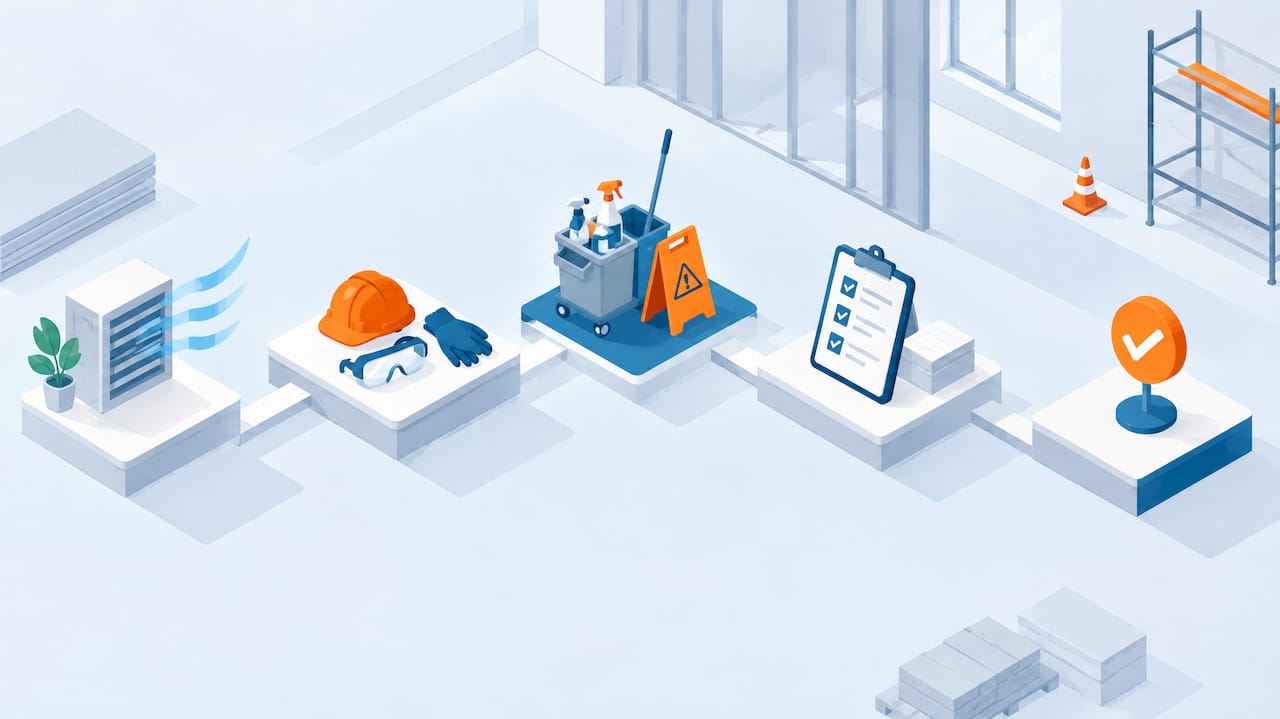
Turning these principles into a working specification takes a handful of concrete steps.
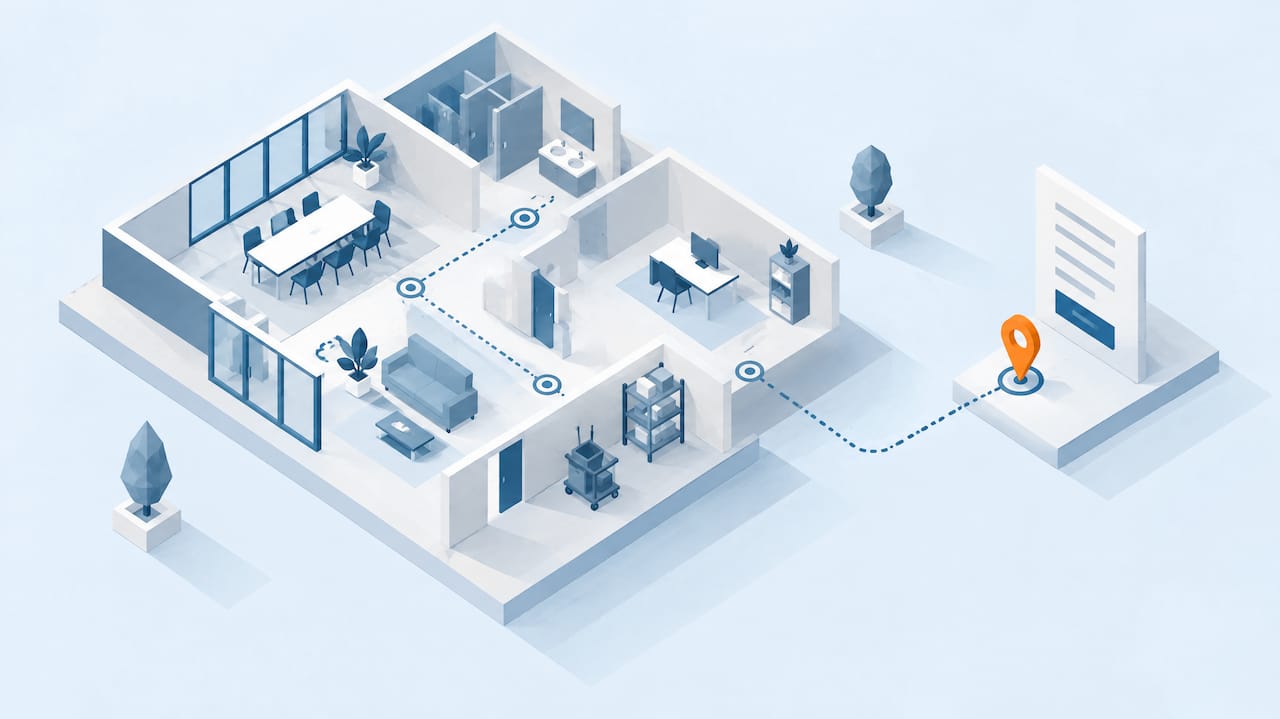
- Map your building into zones and flag high-touch surfaces that need more frequent attention.
- Set task frequency and define what a “clean” result looks like for each zone, in writing.
- Specify products, including DIN-registered disinfectants where disinfection is required, HEPA vacuums for carpeted areas, and confirm PPE and SDS access for the crew.
- Define how quality gets verified: digital checklists, a set audit cadence, and a timeline for corrective action when something is missed.
- Coordinate scheduling with HVAC and maintenance work, and include a ventilation step before reopening any space after contaminant-generating activity.
A plan built this way gives both you and your contractor a shared, checkable standard instead of a general promise to “keep things clean.”
Publisher perspective: cleaning as building stewardship, not a checklist
Treating cleaning as routine maintenance misses the point: it’s a daily layer of building stewardship that touches air quality, asset life and how people feel in a space. The programmes that hold up over years are the ones built on documentation, not good intentions. Over many years serving commercial clients, the pattern we’ve seen is consistent: facilities with written scopes, trained staff and real audit trails have fewer surprises, and that’s reflected in a high repeat-client rate reported across projects.
— Jack
Request a site visit for your commercial cleaning programme
We build every commercial cleaning programme around your building’s actual layout, traffic patterns and air quality goals, not a generic template. We have trained teams and document every visit with checklists so you can see exactly what was done and when.
If you manage a facility in Winnipeg or Calgary and want a programme built around a documented scope rather than guesswork, request a free site visit and written proposal and we’ll walk your space with you before quoting anything.
FAQ
How much is a commercial cleaner?
Commercial cleaning rates depend on square footage, frequency, labour and any specialized equipment the job requires, so there’s no single published figure that applies everywhere. Request a line-itemed, written proposal that breaks out these cost drivers so you can compare bids fairly.
What is the 20 minute rule in cleaning?
There’s no single recognized rule on timing documented in Canadian cleaning or workplace safety guidance, and definitions of any informal rules vary by source. If you’ve encountered such a guideline elsewhere, treat it as a general time-management tip rather than an industry standard, and rely on a documented scope of work instead.
What are the average commercial cleaning rates in Ontario?
Commercial cleaning rates vary by region, building size, frequency and service type, and no single Ontario-wide rate applies across the industry. The most reliable way to get an accurate figure for your building is a written proposal based on a site visit.
Do I need a license to clean houses in Alberta?
This question concerns residential house cleaning, which falls outside commercial building cleaning and the contractor-managed programmes this article covers. For commercial facilities, what matters is contractor insurance, WHMIS training and safety compliance, which you can verify directly with your prospective contractor.
Sources
These Canadian government and safety resources informed the guidance above, alongside our own internal service pages for readers who want more detail on specific services like floor care or post-construction cleanup.
Recommended
- Industrial Cleaning for Winnipeg Facilities
- Janitorial vs Commercial Cleaning
- Benefits of Professional Commercial Cleaning for Businesses
Learn more about Eshine’s commercial cleaning in Winnipeg.